
South Africa: Solar Panel Bird Mesh Supplier for Trade
Short answer: We are a manufacturer of solar panel bird mesh in Anping, Hebei, China, and we supply trade buyers directly from the factory. The mesh is welded 12.7 mm (1/2″) with black PVC coating over galvanised wire, comes in 4″, 5″, 6″ and 8″ widths and 100 ft (30 m) rolls, with 60, 80 or 100 clip sets per roll, and starts at 10 rolls for stock sizes. For South Africa, request a delivered (DDP) quote for South Africa.
Buyers in South Africa usually call this product solar panel bird mesh, pigeon proofing mesh or solar panel bird guard, and sometimes critter guard. It is the same material whatever name your customers use. This page sets out what we make, how it packs, and what to send us so the quote comes back right the first time.
What a South Africa Solar Panel Bird Mesh Order Covers
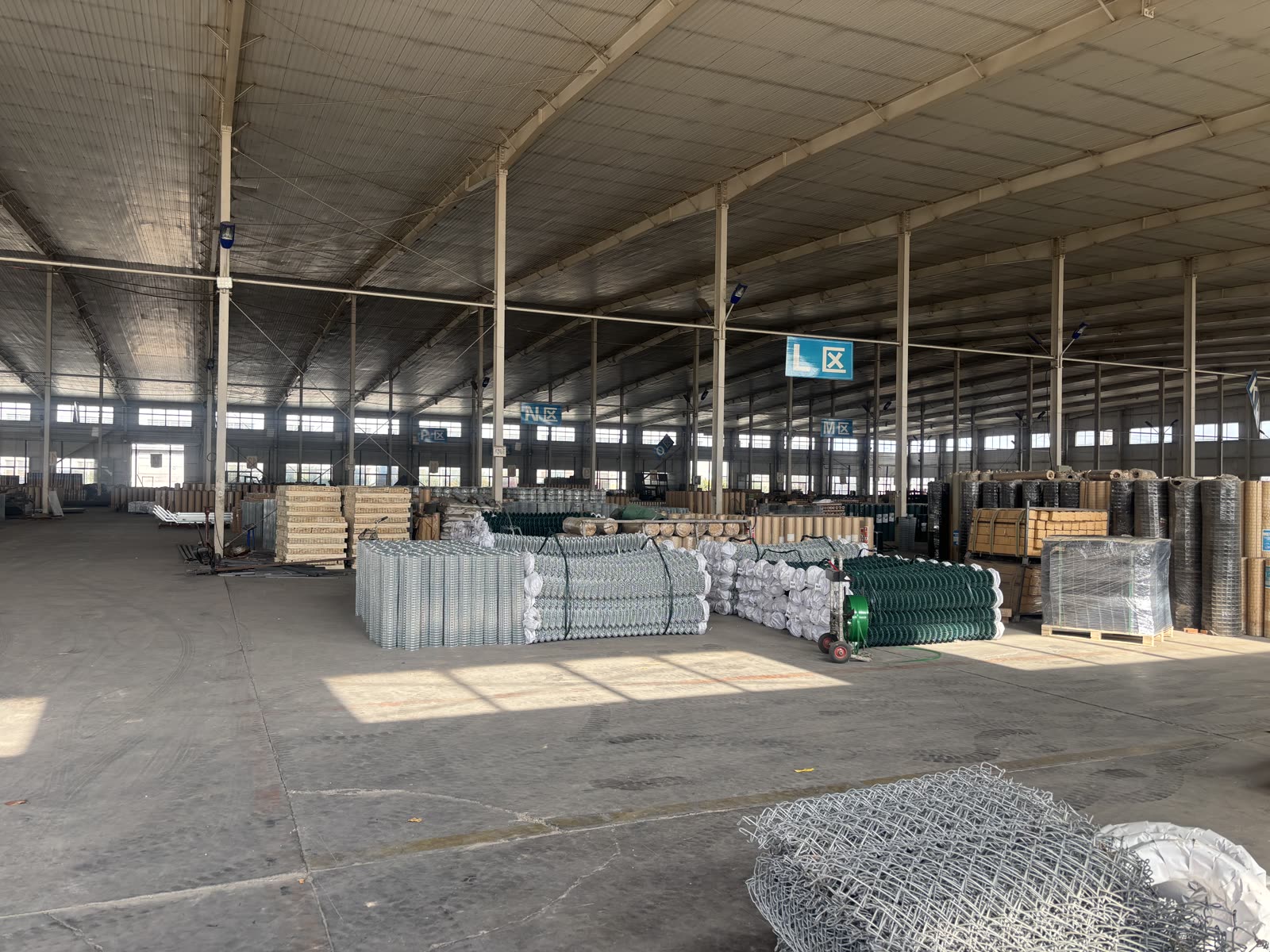
We are the manufacturer, not a trading company. For a South Africa order you choose the wire diameter, width, clip material and carton branding, we make or pick from stock, and freight is quoted as a separate line with its own amount. Lead times and packing follow the same general terms we quote to any export buyer.
What the product does. Solar panel bird mesh closes the gap between the panel edge and the roof so that pigeons, rodents and squirrels cannot nest under the array. That single function is the reason the product exists, and it needs no roof penetration to achieve it.
Names to watch for on a South African order. Solar panel bird mesh, pigeon proofing, solar panel bird guard and critter guard all describe the same roll. When you write the specification, use the wire diameter, width and roll length so there is no ambiguity.
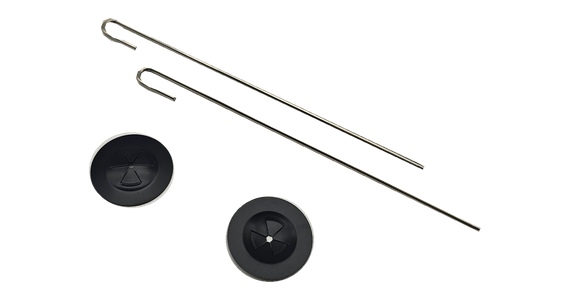
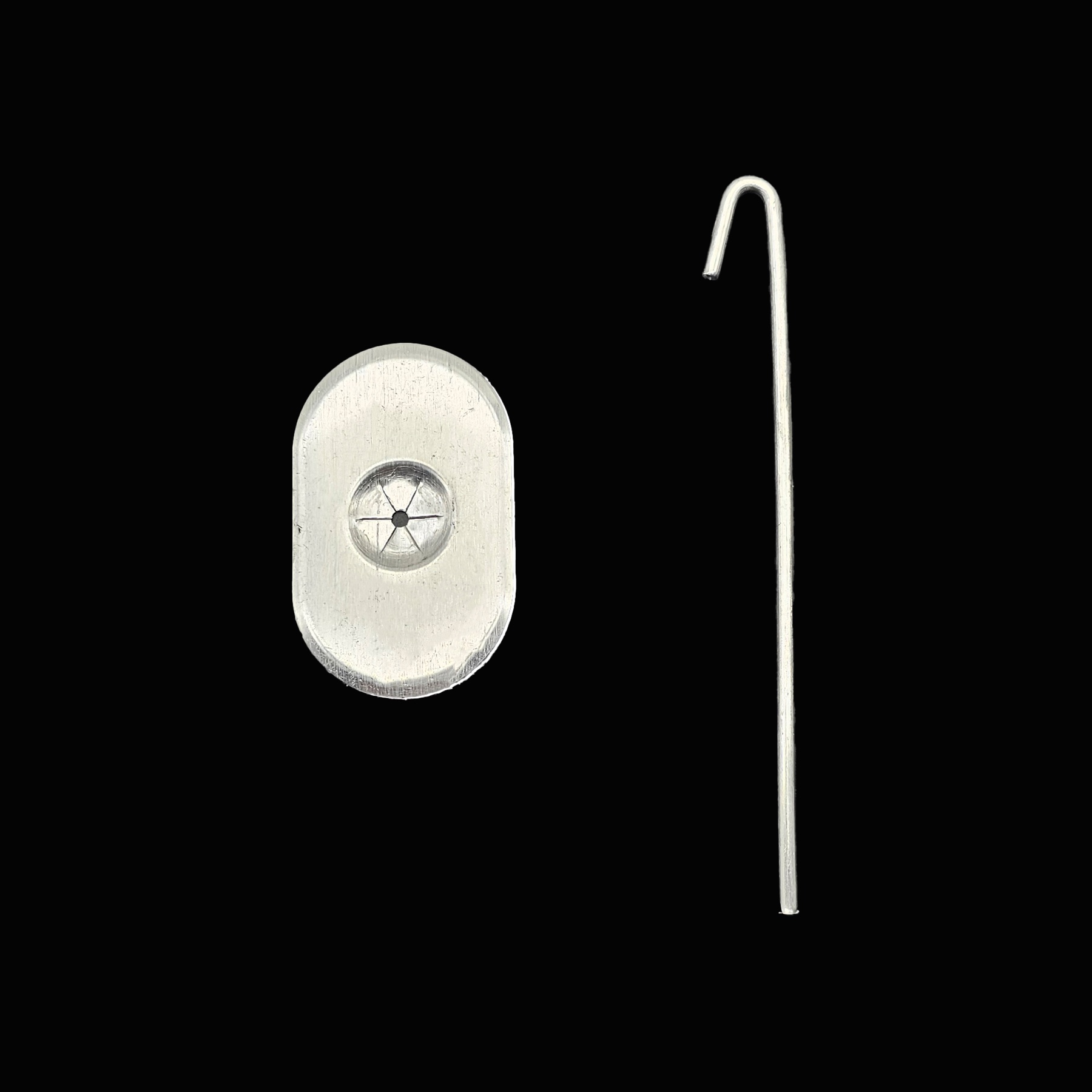
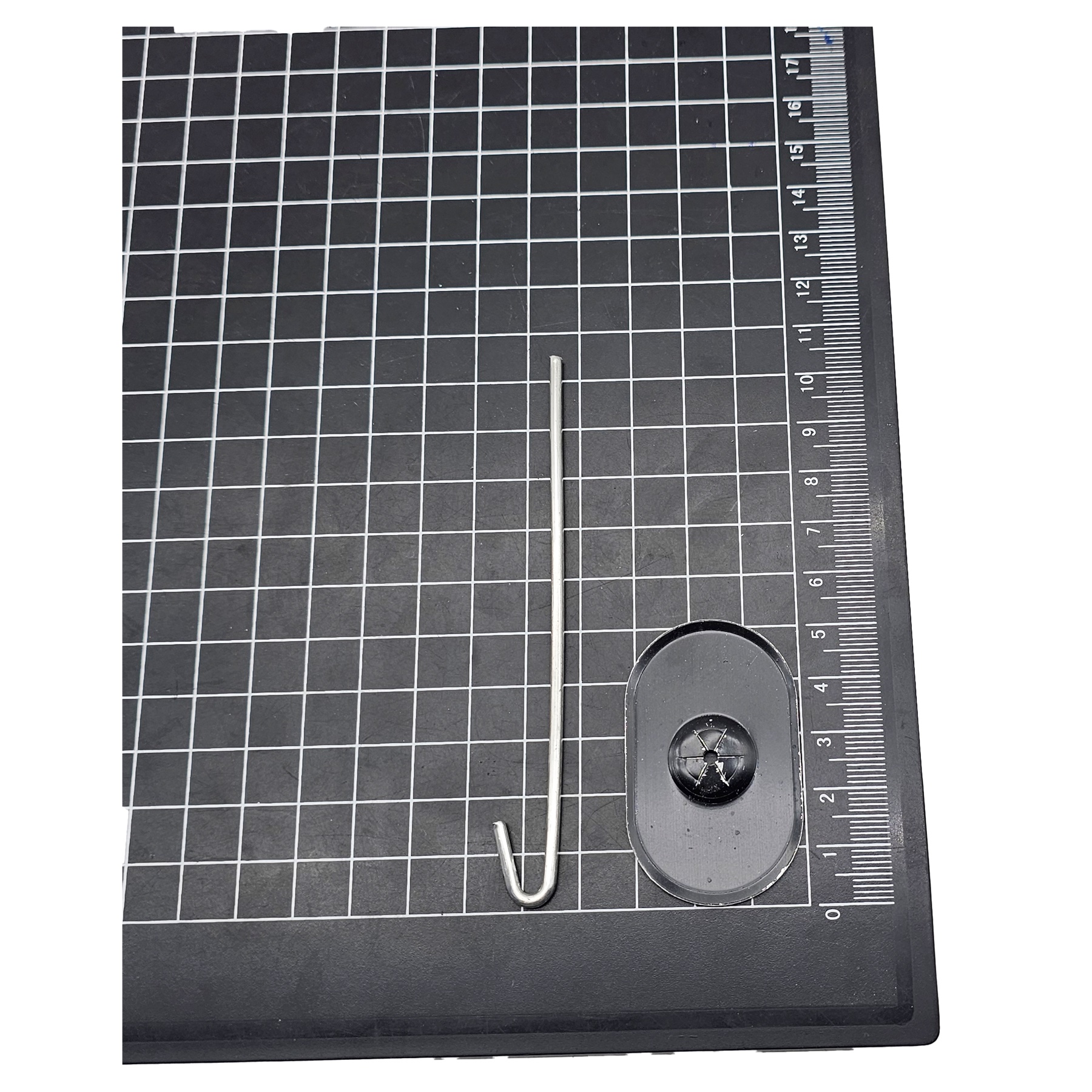
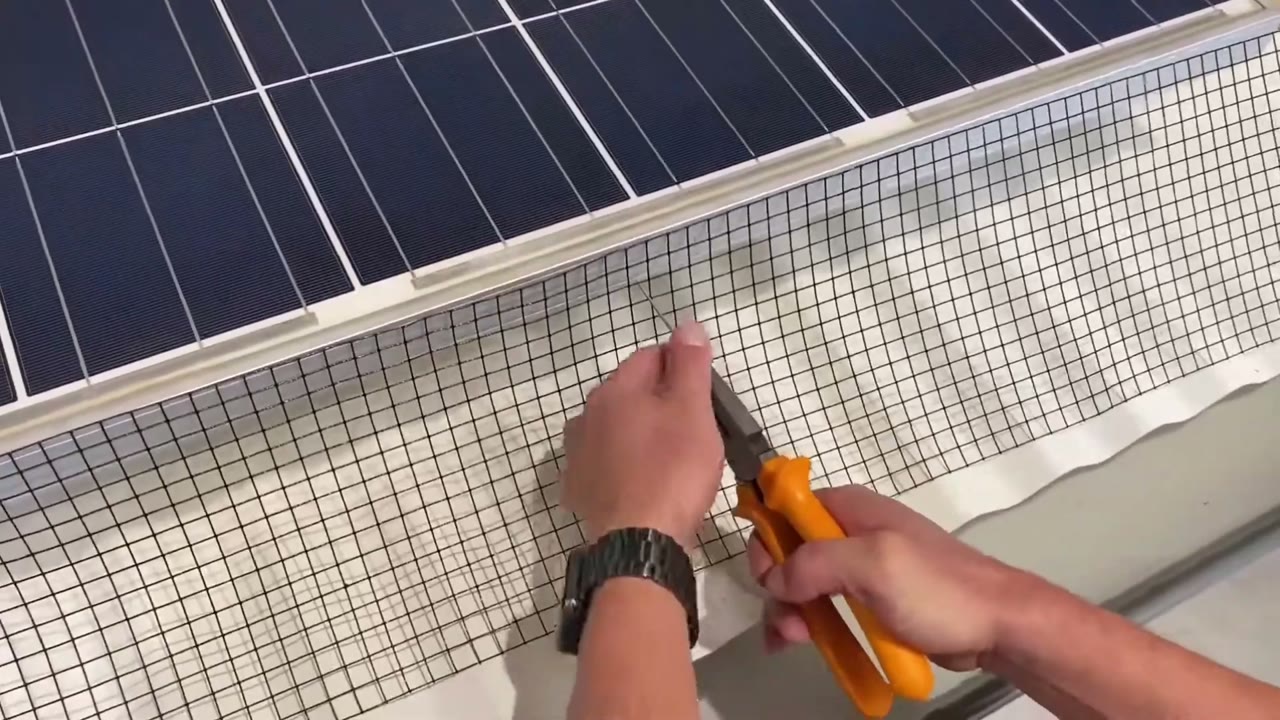
How it is fitted on site. The clip is a J-shaped stainless hook wire plus a black retaining disc with a star cut, and discs come in large and small sizes. The hook is taken over the panel frame, the wire passes through the mesh, and the disc is pressed on to hold the mesh tight against the frame, with the lower edge sitting flush to the roof. For roof work and for anything that touches the panel frame, follow the panel maker’s instructions and local safety rules, including working-at-height requirements.
Installation videos and written instructions are available for your crews. For a step-by-step walk-through, see our installation guide.
What You Can Customize
Several points are open on a South Africa order:
Wire diameter. 1.0 mm, 1.2 mm or 1.3 mm after coating. All three are standard, so pick the gauge that suits your jobs and keep it consistent per SKU.
Width. 4″, 5″, 6″ and 8″ as standard, about 100, 125, 150 and 200 mm. Very wide gaps can be covered with a custom size such as 200 mm × 30 m or 16″ high, quoted on request.
Clip material. Stainless steel, aluminium, or UV-resistant non-metallic nylon. The nylon option is non-conductive, which matters where the clip sits close to panel terminations or where local practice calls for a non-metallic fixing. Stainless and aluminium are the metal options.
Clip count per roll. 60, 80 or 100 sets, with 100 as the default. If your crews fit clips at a tighter spacing than standard, say so and we will pack to that count.
Stainless versions. PVC-coated stainless wire, or uncoated 304 stainless, both made to order from 10 rolls. 316 stainless mesh is also available and carries a 25-year warranty (free replacement mesh). Galvanised mesh does not carry that warranty, and neither does 304.
Packaging. Standard cartons carry your logo sticker at no charge. A printed colour box is available at printing cost with no minimum quantity, which is the usual route for wholesalers who resell rolls under their own brand.
Options and Specifications
The table below sets out every standard combination and who each one tends to suit. Widths are nominal imperial sizes with the approximate mm equivalent; roll length is 100 ft (30 m) throughout.
| Wire (after coating) | Width | Stock / make-to-order | Typical use |
|---|---|---|---|
| 1.0 mm galvanised, black PVC | 4″ (about 100 mm) | Make to order | Narrow gaps; light, low-profile runs |
| 1.0 mm galvanised, black PVC | 6″ (about 150 mm) | In stock | General residential arrays with a normal panel-to-roof gap |
| 1.0 mm galvanised, black PVC | 8″ (about 200 mm) | In stock | Wider gaps on tilt frames and raised mounting |
| 1.2 mm galvanised, black PVC | 8″ (about 200 mm) | Make to order | Trade buyers wanting a mid-weight roll at the widest standard width |
| 1.3 mm galvanised, black PVC | 5″ (about 125 mm) | Make to order | Heavier mesh for exposed sites and long runs |
| 1.3 mm galvanised, black PVC | 6″ (about 150 mm) | In stock | Heavier general-purpose roll for installers |
| 1.3 mm galvanised, black PVC | 8″ (about 200 mm) | In stock | Wide gaps where the mesh must hold its shape |
| PVC-coated stainless wire or uncoated 304 | Any standard width | Made to order, 10 rolls | Long-life installations and work near the coast |
| 316 stainless | Any standard width | Made to order, 10 rolls | Long-life installations; 25-year warranty (free replacement mesh) |
Mesh opening is 12.7 mm (1/2″) welded square grid on every version. The PVC coating is black on galvanised and on coated stainless; uncoated 304 and 316 are supplied without coating.
The PVC coating on our mesh has been third-party tested: the coating sample passed RoHS testing (DN Testing, 13 August 2026) and passed UL94 V-0 flame-retardant testing (CTIC, 23 May 2024). Those results relate to the tested samples; they are not a claim of CE or UL listing, and we do not describe the product as certified. We have no salt-spray test data, so where a buyer asks about coastal performance we treat it as general guidance: stainless grades are the usual choice for salt exposure, and the 25-year warranty (free replacement mesh) applies to 316 only.
Explore Options
Narrow-gap runs where a light, low-profile mesh is enough.
Details · Request a Quote
The general-purpose roll for residential arrays with a normal panel-to-roof gap; in stock.
Details · Request a Quote
Wider gaps behind tilt frames and raised mounting; in stock.
Details · Request a Quote
For buyers who want a mid-weight roll at the widest standard width.
Details · Request a Quote
Heavier mesh for exposed sites and long straight runs.
Details · Request a Quote
Heavier general-purpose roll for installers working mixed roof stock; in stock.
Details · Request a Quote
Wide gaps where the mesh must hold its shape through fitting; in stock.
Details · Request a Quote
Long-life installations where a black finish matching the panel frame matters; made to order.
Details · Request a Quote
Long-life installations where a bare metal finish is acceptable; made to order, about one week to produce.
Details · Request a Quote
Coastal and long-life sites; the only version with a 25-year warranty (free replacement mesh).
Details · Request a Quote
The default metal fixing for installer and contractor orders.
Details · Request a Quote
Lighter metal fixing for trade buyers specifying aluminium.
Details · Request a Quote
Non-conductive, UV-resistant option for work close to terminations.
Details · Request a Quote
For gaps outside the standard widths, such as 200 mm × 30 m or 16″ high; quoted per order.
Request a Quote
Where It Is Used
Residential retrofit. Adding mesh to an existing array after birds have already found the gap. Width choice follows the measured gap and the roof type, and 6″ or 8″ covers a wide range of jobs.
New-build and re-roof projects. Where the array goes on as part of a new roof or a re-roof, the mesh can be sized and cut alongside the rail layout, which usually means fewer joins and a cleaner finish. Our page on bird protection on new-build roofs covers the decisions that come up at that stage.
Commercial and light-industrial rooftops. Longer runs, more joins, and often a taller panel-to-roof gap behind tilt frames. Wholesalers supplying contractors on these sites tend to hold 8″ rolls and a clip stock that matches.
Solar cleaning and maintenance firms. Cleaners see the early symptoms first: droppings concentrated on one part of the array, nesting material at the frame edge, water pooling oddly at the gutter. If your crews report these, the symptom-and-fix breakdown is a useful briefing sheet for staff.
Pest-control companies. Pigeon proofing is a natural add-on to an existing service line, and pigeon-proofing supplies for pest controllers are a regular trade order for us. See supplies for pest controllers.
Wholesale and distribution. Buyers stocking rolls for resale usually want standard sizes, blank or own-brand cartons, and a clip option that matches what local fitters already use.
Key Trade-offs When Choosing
Galvanised versus stainless. Galvanised wire with PVC coating covers most installations. If the site is close to the coast or the sea air is heavy, stainless is the safer long-term call, and the 316 option carries the 25-year warranty (free replacement mesh). For inland sites with no salt exposure, galvanised is usually the sensible choice on cost.
1.0 mm versus 1.3 mm. If runs are long and straight and the gap is moderate, 1.0 mm gives a lighter roll. If you prefer a heavier gauge across your range, 1.3 mm is the standard alternative. 1.2 mm sits between the two and is currently offered only in 8″.
Width: the most common mistake. Ordering 6″ across the board and then finding some arrays need 8″ is the single most frequent sizing problem in this trade. Measure the actual panel-to-roof gap on a sample of jobs before you set your stock mix, and remember that the lower edge should sit flush to the roof, so a little extra width is easier to trim than a shortage is to fix. Our width guide explains how to measure.
Clip material. Stainless is the default for durability. Aluminium is lighter and still metal. Nylon is the choice when non-conductivity matters or when local practice favours a non-metallic fixing. The trade-off is that each material suits a different specification and a different price point, so pick one per product line rather than mixing within a single SKU.
Coated stainless versus uncoated 304. The coated version gives a black finish that matches the panel frame; the uncoated version is bare metal. Both are stainless and both are made to order. If appearance matters on visible roof elevations, the coated finish hides the wire better.
Standard sizes versus custom. Standard sizes ship fastest. Custom sizes such as 200 mm × 30 m are available but are quoted per order and add a production step. If you only need a handful of unusual widths, expect to wait longer than for stock.
Packing, Lead Time and Fitting
Packing. 1.0 mm rolls pack two rolls per carton (so 10 rolls is 5 cartons). 1.3 mm rolls pack one roll per carton, with these carton sizes and gross weights excluding clips: 1.3 mm × 5″ 300 × 300 × 130 mm, 3.8 kg; 1.3 mm × 6″ 300 × 300 × 160 mm, 4.5 kg; 1.3 mm × 8″ 300 × 300 × 210 mm, 5.8 kg. Per-roll gross weights excluding clips: 1.0 mm × 4″ 1.75 kg; 1.0 mm × 6″ 2.6 kg; 1.0 mm × 8″ 3.4 kg; 1.2 mm × 8″ 4.5 kg. Orders under 50 rolls ship in cartons; 50 rolls and above go on pallets.
Clips. 100 stainless clip sets weigh about 0.5 kg and 100 aluminium sets about 0.7 kg; factor that into your freight estimate if you ship clip sets in the same cartons.
Lead time. In-stock sizes at 6″ and 8″ in 1.0 mm and 1.3 mm galvanised wire ship once confirmed; we re-check stock before each order. 304 and 316 stainless take about one week to produce. For South Africa we do not hold a standing transit time: request a delivered (DDP) quote for South Africa and we will quote the full door-to-door figure for your address. Freight is always shown as a separate line with its own amount. Read more about how we handle shipping and DDP delivery.
Sample before you commit. One roll is free and you pay the freight; stock samples can go out the same day. A single roll tells your fitters whether the width and wire gauge suit the jobs they actually see. See sample requests and MOQ.
On the roof. Fit the hook over the panel frame, the wire through the mesh, press the retaining disc on, then trim. Keep the lower edge flush to the roof. Follow the panel maker’s instructions on anything that touches the frame and local safety rules for roof work. Installation videos and written instructions are available for your crews, and there is a resources and installation library to work from.
Pitfalls we see in trade orders. Ordering clips separately from rolls and running short mid-job; assuming all roofs take the same width; and forgetting that a clip set count of 100 per roll assumes standard spacing. If your crews space clips more closely, tell us at order stage so the count is right.
How a Custom Order Works
1. Tell us the specification. Wire diameter, width, clip material and clip count per roll, plus quantity and any carton branding.
2. We confirm stock and lead time. Stock sizes are confirmed against current stock; stainless and non-standard sizes go into production with a lead time we give you in writing.
3. We quote. Goods and freight are quoted as separate lines with their own amounts, and we can quote door-to-door (DDP, duties paid) to your address.
4. You approve and pay. Small orders can go by PayPal, or by company bank transfer; larger orders can run 30% deposit with 70% before shipping. We do not accept cash on delivery.
5. Packing. Logo sticker cartons are free; printed colour boxes are charged at printing cost with no minimum. Cartons or pallets depending on volume.
6. Shipping. We book the shipment and keep you informed up to delivery.
Start the process on our quote request page. If you are setting up a private-label line, the OEM and private label page covers the branding options, and critter guard wholesale covers the stocking side. Buyers weighing up the two main material routes should read PVC-coated steel versus stainless.
What to Tell Us When You Ask for a Quote
Send these points and the quote comes back without a round of questions:
- Product name you use — solar panel bird mesh, pigeon proofing or bird guard, so we know which line you mean.
- Wire diameter: 1.0 mm, 1.2 mm, 1.3 mm, or stainless.
- Width in mm or inches: 4″, 5″, 6″, 8″, or a custom size such as 200 mm × 30 m.
- Quantity in rolls, and whether you want mixed sizes to reach the 10-roll minimum.
- Clip material — stainless, aluminium or nylon — and sets per roll (60, 80 or 100).
- Delivery country and full delivery address so we can quote door-to-door; for South Africa, request a delivered (DDP) quote for South Africa.
- Carton branding: plain, logo sticker (free) or printed colour box.
- Any site notes that affect the choice — coastal exposure, roof type, typical gap.
Articles on this site are written by Ethan, Fangyi Hardware — sales@birdguardmesh.com. If you want to compare our material against other systems on the market, the comparison page sets out the differences, and the manufacturer profile explains where the mesh is made.
FAQ
What is the minimum order for solar panel bird mesh to South Africa?
10 rolls for stock sizes, and you can mix sizes and widths within that 10 rolls. Stainless steel is made to order from 10 rolls.
Which widths do South African installers usually buy?
Most jobs sit between 6" and 8", with 4" and 5" used on narrower gaps. Measure the actual panel-to-roof gap on a sample of jobs before you set your stock mix, because ordering all 6" and finding 8" gaps is the commonest sizing mistake.
Do you offer door-to-door delivery to South Africa?
Yes — request a delivered (DDP) quote for South Africa and we will quote the full door-to-door figure for your address. Goods and freight are quoted as separate lines, each with its own amount.
What is the mesh made of?
Standard is galvanised wire with black PVC coating, mesh opening 12.7 mm (1/2"), in 1.0 mm, 1.2 mm or 1.3 mm wire after coating. PVC-coated stainless wire and uncoated 304 stainless are made to order, and 316 stainless is also available.
Does the mesh carry a warranty?
316 stainless mesh carries a 25-year warranty (free replacement mesh). Galvanised mesh and 304 stainless do not carry that warranty.
How does the mesh fix to the panel?
The J-shaped hook wire goes over the panel frame, the wire passes through the mesh, and the retaining disc is pressed on to hold the mesh tight. The lower edge sits flush to the roof. Follow the panel maker's instructions and local safety rules for roof work.
Can I get a sample before ordering?
Yes — one roll is free and you pay the freight, and stock samples can ship the same day.
Can the cartons carry our own brand?
Yes. A logo sticker on the standard carton is free, and a printed colour box is charged at printing cost with no minimum quantity.
Request a Quote
Send your drawing or size list, the quantity and the delivery country, and we will reply with options and a quote. Request a quote.