
6 Inch or 8 Inch Solar Panel Mesh: Trade Buyer Guide
Short answer: 6 inch (about 150 mm) and 8 inch (about 200 mm) black PVC-coated welded mesh are both stock widths for trade orders, and the right choice depends on the gap you are closing and the panel mounting. Choose 6 inch for standard flush-mounted rails where a tighter skirt is enough, and choose 8 inch where the panel sits higher off the roof, where the frame profile is deeper, or where common trade practice in your market is a 200 mm roll. Both widths come in 100 ft (30 m) rolls with 12.7 mm (1/2 inch) welded openings and black PVC coating.
Which width should your trade order actually cover?

The mesh does one job: it closes the gap between the panel edge and the roof so pigeons, rodents and squirrels cannot nest under the array. Width is how much vertical coverage you buy. Extra width gives you slack to bend, overlap and fold around corners; too little width leaves a gap that a determined bird will find.
In general industry practice, the mesh is fixed to the panel frame and drops to the roof surface, with a slight outward fold so the bottom edge sits down on the tiles or sheeting. That means you need enough width for the drop plus a fold. On a low-profile rail system, 6 inch is often enough. On taller rails, on concrete tile with deep profile, or on arrays where the installer wants a visible, generous skirt, 8 inch gives more margin.
Market habit matters too. In Australia and the UK, 200 mm × 30 m is the common trade format, which is effectively the 8 inch roll. In the US, 6 inch × 100 ft is the common format. If you supply installers who already buy a particular size, matching it reduces friction in their van stock and quoting. You can read more on our mesh width guide if you want the wider view before you commit to a stock profile.
In galvanised wire, 6 inch and 8 inch are both stocked in 1.0 mm and 1.3 mm. The 1.2 mm wire is made in 8 inch only. Stainless steel is made to order from 10 rolls. Orders of 10 rolls for stock sizes can mix widths and wire diameters, so a single first order can carry 6 inch and 8 inch together.
What you can tailor on a 6 inch or 8 inch roll
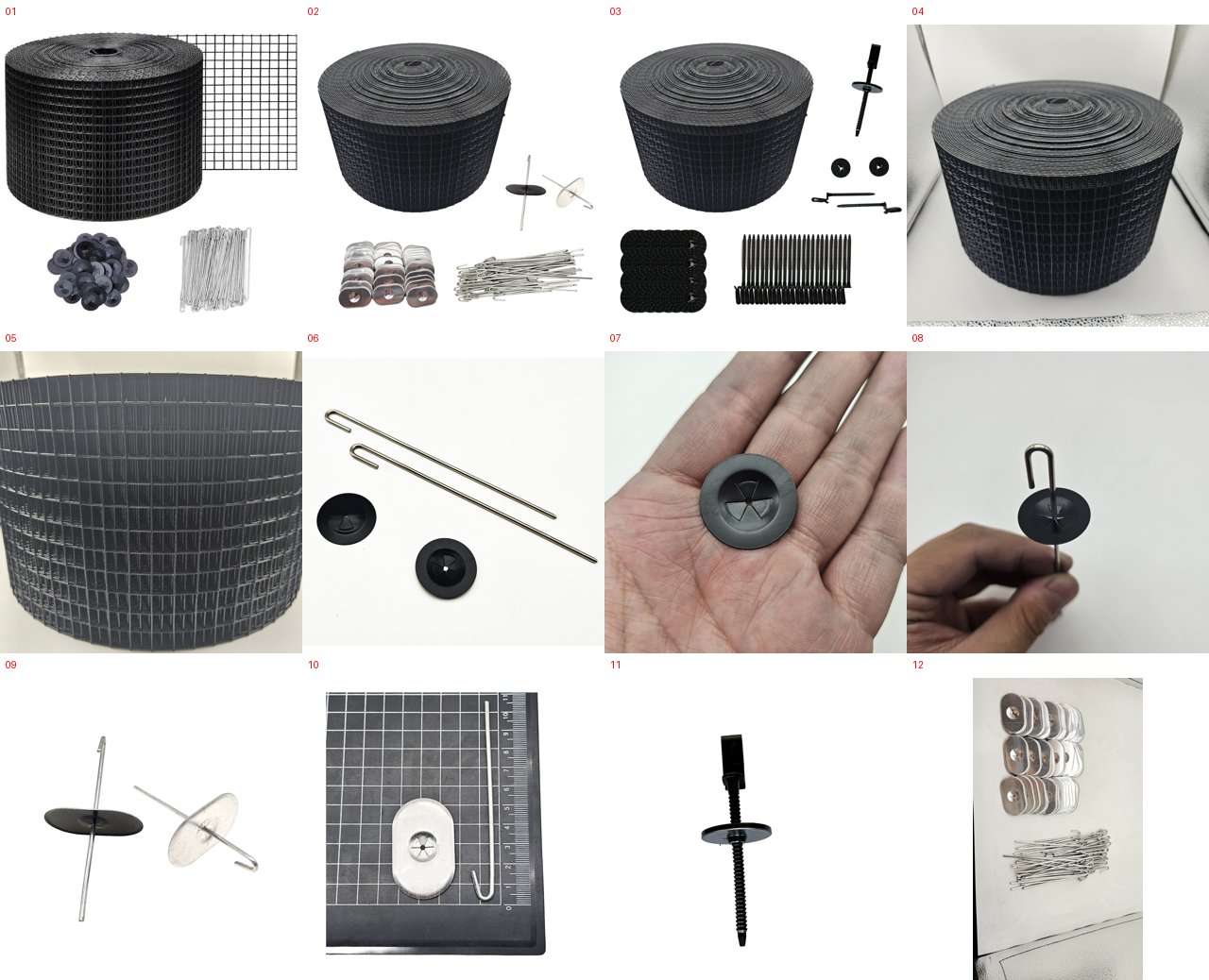
These are the variables a trade buyer can set. Most orders combine two or three of them.
Wire diameter. The coated wire comes in 1.0 mm, 1.2 mm and 1.3 mm. In the standard range, 1.0 mm and 1.3 mm are made in 6 inch and 8 inch; 1.2 mm is a standard size in 8 inch. If you want a heavier or lighter wire than the roll you already stock, tell us the site conditions and we will confirm what the standard range covers.
Base material. Galvanised wire with black PVC coating is the standard. PVC-coated stainless wire or uncoated 304 stainless are available on request, and 316 stainless mesh carries a 25-year warranty (free replacement mesh). As a general rule, stainless is the material most buyers consider for coastal or high-corrosion sites, and the galvanised option does not carry the 25-year warranty.
Clip material. Stainless steel, aluminium or UV-resistant non-metallic nylon. Stainless clips are a J-shaped hook wire with a black retaining disc with a star cut, in large and small disc sizes. Each roll ships with 60, 80 or 100 clip sets, 100 being the default.
Roll length and width. Standard is 100 ft (30 m). Custom sizes such as 200 mm × 30 m or 16 inch high are available on request, so if a contractor wants a single width for a whole portfolio, that is a conversation worth having before you commit to stock.
Packaging. Cartons with your logo sticker are free. Custom printed colour boxes are charged at printing cost, with no minimum.
Options and specifications at a glance
The table below shows how the stocked options map to sizes and where each fits. All sizes use the same 12.7 mm (1/2 inch) welded opening and black PVC coating unless stated.
| Option | Wire diameter | Width and roll length | Where it fits |
|---|---|---|---|
| Standard galvanised, light | 1.0 mm coated | 4″, 6″, 8″; 100 ft (30 m) | High-volume residential retrofit where the mesh is rarely touched after fitting |
| Standard galvanised, heavy | 1.3 mm coated | 5″, 6″, 8″; 100 ft (30 m) | Long runs, exposed roofs and crews who want a stiffer roll that keeps its shape |
| Mid-weight galvanised | 1.2 mm coated | 8″; 100 ft (30 m) | Buyers who want more body than 1.0 mm but do not need the full 1.3 mm wire |
| PVC-coated stainless | On request | Made to order from 10 rolls | Coastal and high-corrosion sites where the black finish still matters |
| Uncoated 304 stainless | On request | Made to order from 10 rolls | Visible edge work and buyers who prefer bare metal at the frame |
| 316 stainless | On request | Made to order from 10 rolls | Long-life coastal work, supplied with a 25-year warranty (free replacement mesh) |
| Clip: stainless | J-hook and black disc | 60, 80 or 100 sets per roll | Default trade choice for a secure fix that will not rust at the frame |
| Clip: aluminium | J-hook with oval washer | 60, 80 or 100 sets per roll | Buyers who want a metal clip but a lighter fixing than stainless |
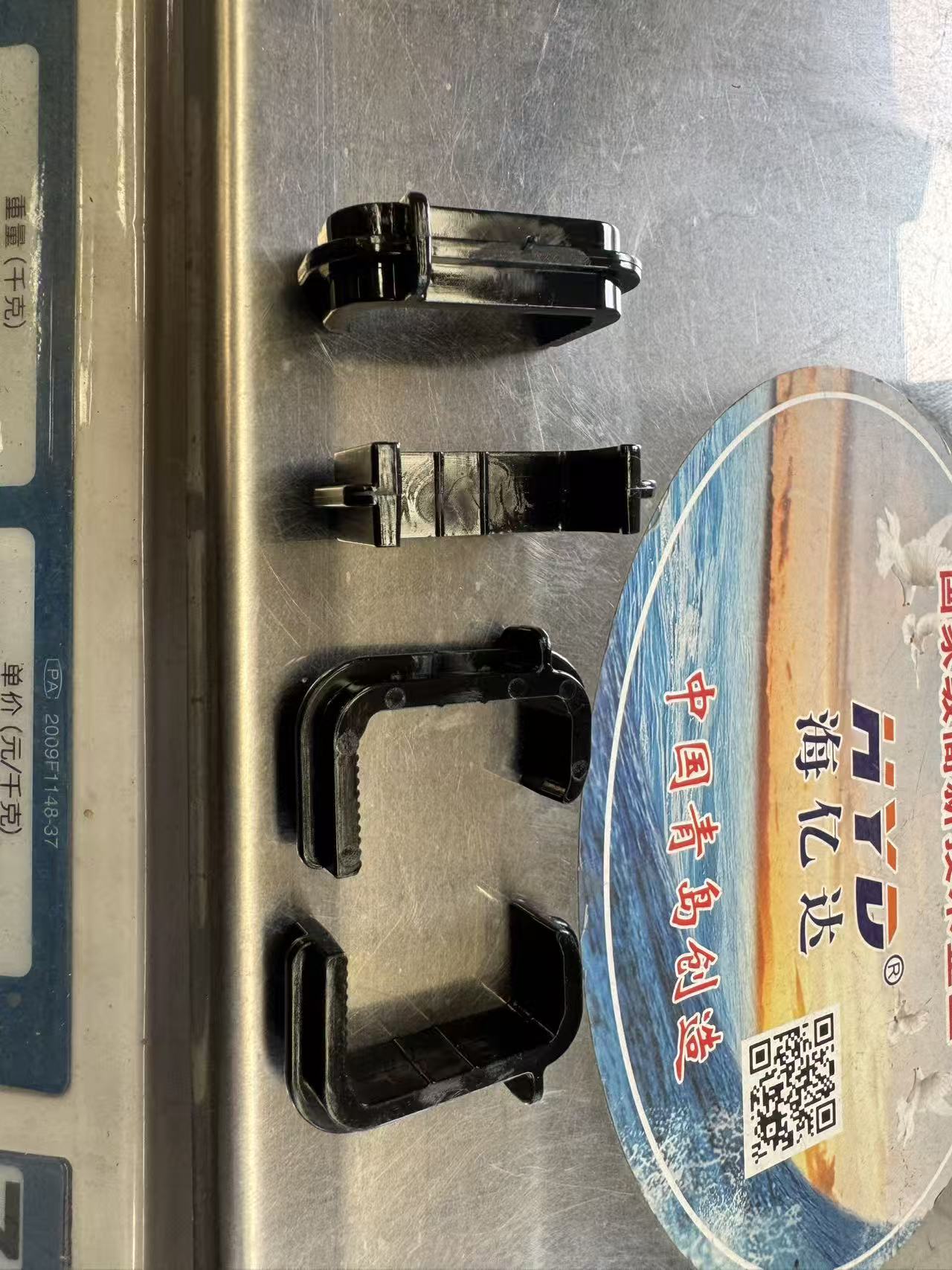
| Clip: nylon | Threaded pin and washer | 60, 80 or 100 sets per roll | UV-resistant and non-conductive, useful where the fixing should not conduct |
| Custom width or length | Any listed wire | E.g. 200 mm × 30 m, 16″ high | Contractors standardising one size across a portfolio |
For the full stainless picture, including when the higher grades are worth the extra handling, see our PVC-coated steel vs stainless comparison and the coastal sites page.
Explore Options
Light stock width for standard residential retrofit where the mesh is rarely handled after fitting.
Details · Request a Quote
Wider skirt for taller rails and pronounced roof profiles, in the lightest wire.
Details · Request a Quote
Stiffer roll for exposed sites and crews who want the mesh to hold its fold on long runs.
Details · Request a Quote
Heavy wire and a generous skirt for trade buyers standardising on 200 mm.
Details · Request a Quote

More body than 1.0 mm without the full stiffness of 1.3 mm.
Details · Request a Quote

Coastal and high-corrosion work where the black finish still matters.
Details · Request a Quote
Visible edge work and buyers who prefer bare metal at the frame.
Details · Request a Quote

Long-life coastal installations supplied with a 25-year warranty (free replacement mesh).
Details · Request a Quote

Default trade fixing: J-hook with black retaining disc, large or small disc, 60–100 sets per roll.
Details · Request a Quote
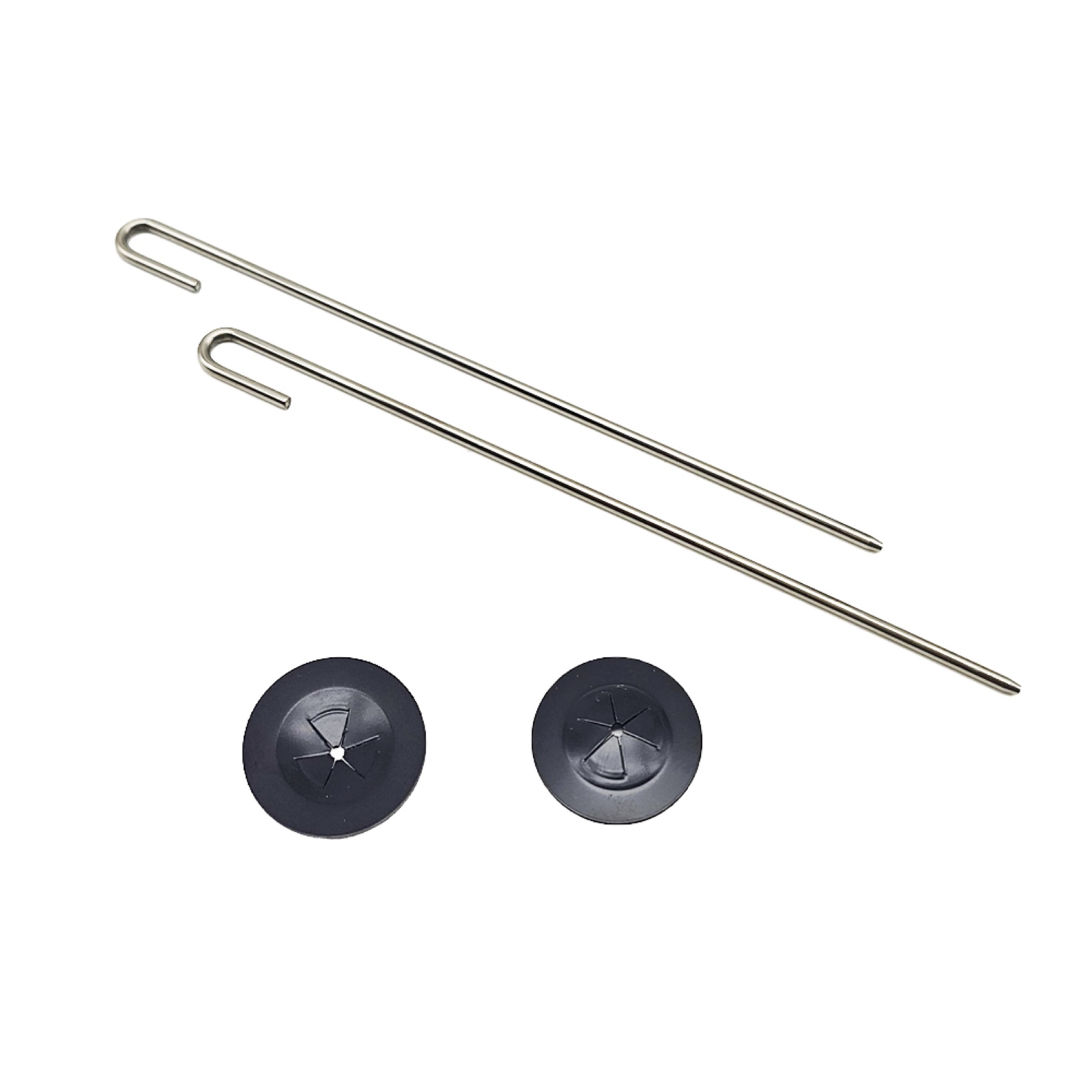
Metal fixing that is lighter than stainless, with an oval washer.
Request a Quote
UV-resistant and non-conductive fixing where the clip should not conduct.
Request a Quote
Contractors standardising one size across a portfolio, e.g. 200 mm × 30 m or 16 inch high.
Details · Request a Quote
Free branding on plain export cartons for distributors selling loose rolls.
Request a Quote
Retail-ready packaging charged at printing cost with no minimum.
Request a Quote
Where 6 inch and 8 inch mesh are used
Both widths are residential retrofit and light-commercial products. The mesh sits along the perimeter of the array, on the lower edge and the sides, where birds and climbing animals get in. It is fixed to the panel frame and either sits down on the roof surface or folds to follow the roof profile.
Typical users are solar installers adding protection to a new array, solar cleaning crews who spot nesting during maintenance and upsell the fix, pest-control companies adding a structural exclusion measure to a pigeon job, and distributors and wholesalers who want a stocked trade item with a clip kit in every roll.
On maintenance rounds, missing or lifted mesh usually shows up as debris on the roof, droppings along the panel edge or birds moving in and out under the array. Our maintenance symptoms page helps crews spot the pattern before it becomes a callback.
On new-build roofs, the gap between the panel and the roof can differ from a retrofit because the mounting and roofing may be installed in a different order. That affects the width you want. Our new-build roof page covers that case, and the retrofit page covers the older roof.
Cyclone-prone areas in Australia put more load on the fixing and on how the mesh edge is dressed down. That is a workmanship and fixing question more than a width question, but it does affect whether a wider roll with more fold is useful. Our cyclone-prone installation page sets out the pattern.
Key trade-offs when choosing 6 inch or 8 inch
6 inch: tighter, lighter, less waste. This holds when the panel rail is low, the roof is a shallow profile and your crews work fast on standard residential arrays. The mesh weighs less per roll (1.0 mm × 6 inch is 2.6 kg per roll excluding clips), so a van carries more coverage. The trade-off is less margin for folding, so if the roof surface is uneven or the gap is taller than expected, the skirt can end up short.
8 inch: more margin, more material. This holds when the frame is deep, the roof profile is pronounced, or you want a generous fold at the bottom so the mesh does not ride up. It also matches the 200 mm × 30 m trade format that many Australian and UK installers already use. The trade-off is more weight and more cost per roll for the same number of rolls, so on large residential volumes the difference adds up over thousands of metres.
1.0 mm vs 1.3 mm wire. 1.0 mm is the lighter stock wire, and 1.3 mm is the heavier option; both are available in 6 inch and 8 inch. The right one depends on how much wind and roof traffic the site sees and how much stiffness the crew wants when folding. 1.2 mm sits between the two and is a standard size in 8 inch.
Galvanised vs stainless. Galvanised with black PVC is the standard and is fine for most inland residential work. Stainless makes more sense on coastal sites and long-life installations, particularly where the customer wants a durable answer in writing — 316 stainless carries a 25-year warranty (free replacement mesh). The trade-off is cost and an about one-week production lead time for stainless rather than a stock dispatch.
Clip material. Stainless is the default where the fixing will see weather and the frame is metal. Aluminium is a lighter metal option. Nylon is UV-resistant and non-conductive, which matters where the fixing must not conduct or where you want a lower-cost accessory. Read the detail on our mesh clips page and the clip buyer guide.
Galvanised vs stainless on the same order. Stock sizes ship quickly; stainless is made from 10 rolls. If a job needs both, split the order rather than waiting for the whole thing.
Any roof work, and any question about whether adding mesh affects the panel warranty, should follow the panel maker’s instructions and local safety rules. That is a site rule rather than something the mesh supplier decides.
Packing, lead time and fitting
Packing differs by wire diameter. 1.0 mm rolls are packed two rolls per carton, so 10 rolls ship as 5 cartons. 1.3 mm rolls are one roll per carton, with carton sizes of 300 × 300 × 130 mm for 5 inch, 300 × 300 × 160 mm for 6 inch and 300 × 300 × 210 mm for 8 inch. Under 50 rolls ships in cartons; 50 rolls and above goes on pallets with the usual export wrap and corner protection.
Per-roll gross weight excluding clips: 1.0 mm × 4 inch 1.75 kg, 1.0 mm × 6 inch 2.6 kg, 1.0 mm × 8 inch 3.4 kg, 1.2 mm × 8 inch 4.5 kg. For 1.3 mm, the carton weight for one roll excluding clips is 3.8 kg for 5 inch, 4.5 kg for 6 inch and 5.8 kg for 8 inch.
Clips add a little weight: 100 sets of stainless clips is about 0.5 kg, and 100 sets of aluminium clips about 0.7 kg. If you are calculating freight for a full pallet, that is worth including.
Lead time depends on what you order. Stock 6 inch and 8 inch galvanised rolls in 1.0 mm and 1.3 mm ship once the order is confirmed. Stainless, 304 or 316, is about one week to produce. Payment to door for Australia is about 6–8 weeks, of which around 30–35 days is at sea, plus booking, loading, customs and final delivery.
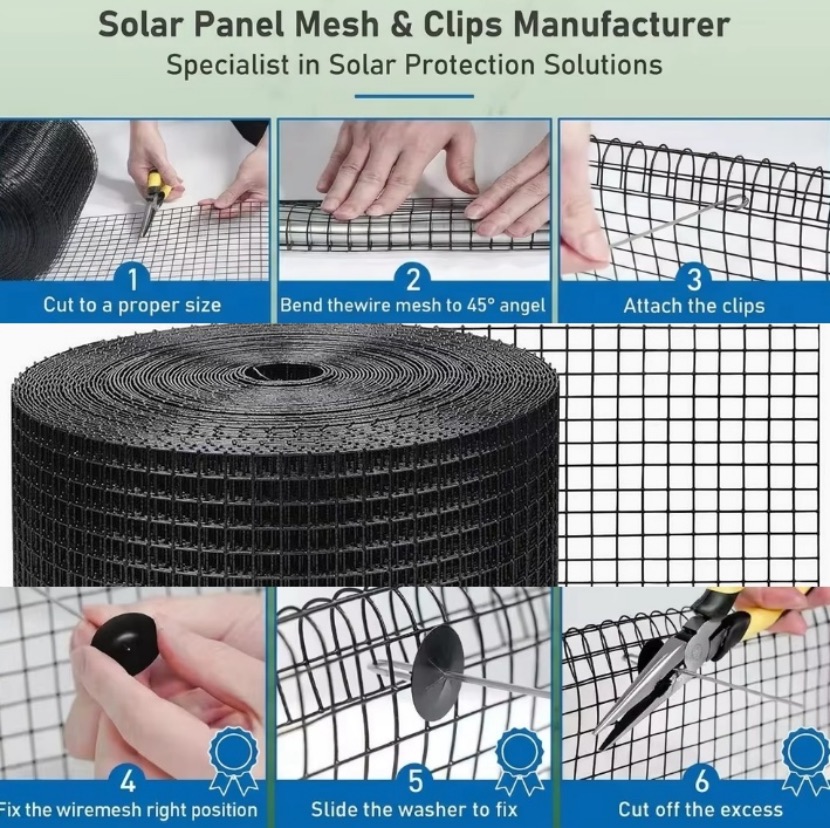
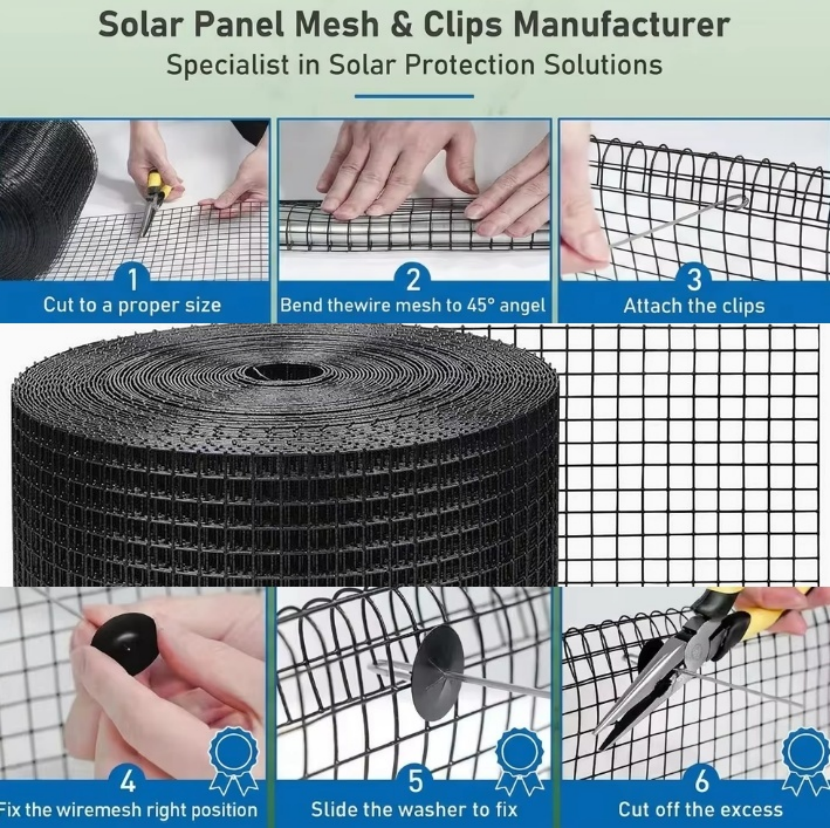
On fitting, the mesh is cut to length, bent to the frame, fixed with the clips and trimmed. Our installation resources include videos and written guidance your crews can follow, and the installation guide walks through the sequence. Where panels are frameless, the clip and fold pattern differs — that is covered on the frameless panel clips page.
Complaints about mesh coming loose usually come back to clip choice and fold, not the width, so match the clip to the frame and dress the bottom edge properly. Our page on mesh coming loose is useful for installers doing warranty callbacks.
How a trade custom order runs
The usual first order is a mixed carton set of 6 inch and 8 inch so a distributor can see what movers want. The sequence we work to:
1. You tell us the width, wire diameter, clip material and total rolls. Stock sizes can mix sizes in a 10-roll minimum. Stainless is made from 10 rolls.
2. We confirm stock, packing and, where relevant, production time.
3. We quote the goods and freight as separate line amounts. Door-to-door duty-paid delivery is available.
4. Payment is PayPal for small orders or bank transfer; larger orders can run 30% deposit and 70% before shipping. Cash on delivery is not accepted.
5. We pack with your logo sticker free, or print a custom colour box at printing cost with no minimum.
6. We ship and share the documentation. Our shipping and DDP page explains the door-to-door route, and the how to order page gives the step-by-step.
A free sample roll is available, one per buyer, with buyer-paid freight; stock samples ship the same day. That matters for distributors comparing the 6 inch and 8 inch feel in the hand before committing to a pallet. The sample and MOQ page sets out both.
If you want to private-label the roll and the carton, the OEM and private label page covers the options. For full-roll pricing by volume, see the bulk price page and the delivered-price calculator.
What to tell us when you ask for a quote
Give us these details in the first message and we can quote without a round of questions.
Width: 6 inch, 8 inch, or both. Say which market you are selling into, since US buyers usually ask for 6 inch × 100 ft and Australian and UK buyers for 200 mm × 30 m.
Wire diameter: 1.0 mm, 1.2 mm or 1.3 mm. If you are unsure, tell us the roof type, the rail height and whether the mesh is handled much after installation.
Base material: galvanised with black PVC, PVC-coated stainless, uncoated 304, or 316 stainless with the 25-year warranty (free replacement mesh).
Clip material and sets per roll: stainless, aluminium or nylon; 60, 80 or 100 sets, with 100 as default.
Quantity: total rolls and how you want them split across sizes. Minimum is 10 rolls for stock sizes, mixed sizes allowed; stainless from 10 rolls.
Delivery country and postcode: so we can quote the freight line separately and give a realistic door-to-door time.
Packaging: logo sticker only, or a custom printed colour box.
Payment route: PayPal or bank transfer, and whether you want the deposit and balance split.
If you want to see how 6 inch and 8 inch compare on a delivered basis before you order, our request a quote page takes you through the form, and the galvanised rolls page and stainless mesh page give the material detail. Distributors building a stocked trade line can also start from the wholesale page.
You can also read about the factory side if you want to know who is making the rolls. Articles on this site are written by Ethan, Fangyi Hardware (sales@birdguardmesh.com).
FAQ
Is 6 inch or 8 inch solar panel mesh better for most jobs?
Neither is universally better. 6 inch suits low rail height and shallow roof profiles, while 8 inch gives more fold at the bottom edge and matches the 200 mm trade format common in Australia and the UK.
What roll length does 6 inch and 8 inch mesh come in?
Standard rolls are 100 ft (30 m). Custom sizes such as 200 mm × 30 m or 16 inch high are available on request.
Can I mix 6 inch and 8 inch in one order?
Yes. Stock sizes have a 10-roll minimum and you can mix sizes and wire diameters within that. Stainless steel is made to order from 10 rolls.
Which wire diameter should I choose for 6 inch and 8 inch rolls?
1.0 mm and 1.3 mm are both stocked in 6 inch and 8 inch. 1.2 mm is a standard size in 8 inch. Choose based on rail height, exposure and how much the mesh will be handled after installation.
Do the rolls come with clips?
Each roll ships with 60, 80 or 100 clip sets, with 100 as the default. Clip material can be stainless steel, aluminium or UV-resistant nylon.
How are the rolls packed for export?
1.0 mm rolls are packed two per carton, and 1.3 mm rolls one per carton. Under 50 rolls ships in cartons; 50 rolls and above goes on pallets.
Is stainless steel mesh available in 6 inch and 8 inch?
Yes, in PVC-coated stainless, uncoated 304 or 316 stainless. Production is about one week from 10 rolls, and 316 stainless carries a 25-year warranty (free replacement mesh).
What lead time should I plan for to Australia?
About 6–8 weeks from payment to your door by door-to-door duty-paid delivery, of which around 30–35 days is at sea, plus booking, loading, customs and final delivery.
Request a Quote
Send your drawing or size list, the quantity and the delivery country, and we will reply with options and a quote. Request a quote.