
New Zealand: Solar Panel Bird Mesh Supplier for Trade
Short answer: We are a manufacturer of black PVC-coated welded solar panel bird mesh. Rolls are 12.7 mm (1/2″) mesh in 1.0 mm, 1.2 mm or 1.3 mm wire, widths of 4″, 5″, 6″ and 8″, and 100 ft (30 m) roll length, with clip sets packed per roll. Custom sizes are made on request, and we quote New Zealand orders door to door (DDP) on request.
What a New Zealand Solar Panel Bird Mesh Order Covers
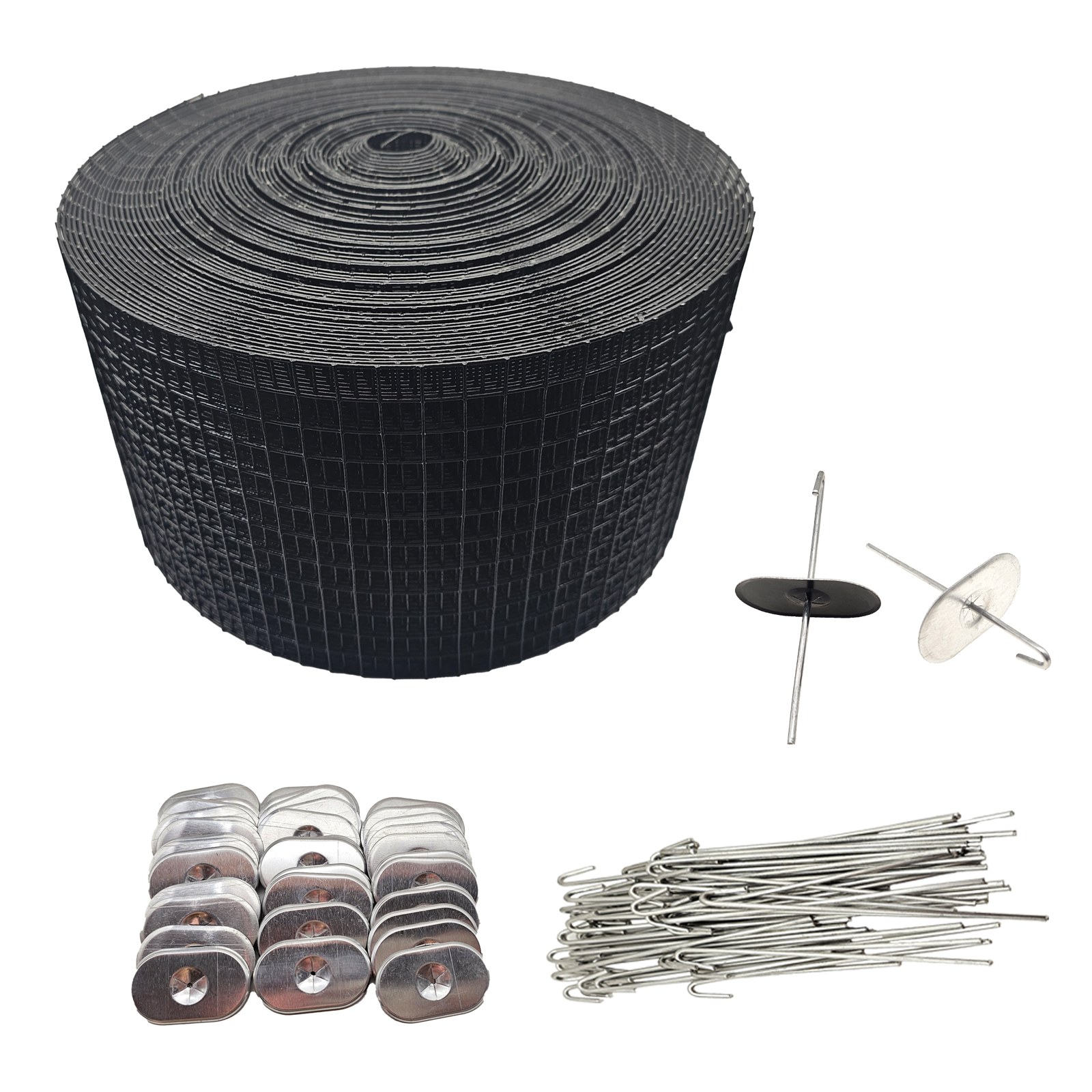
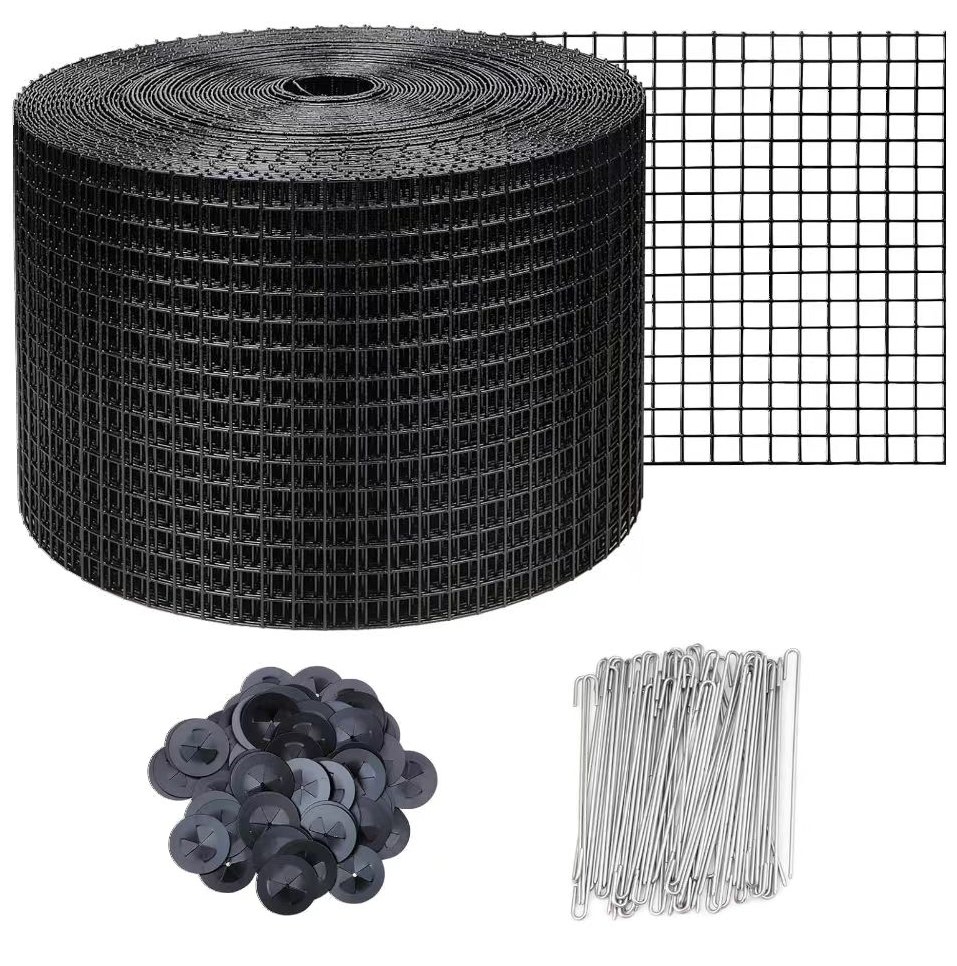
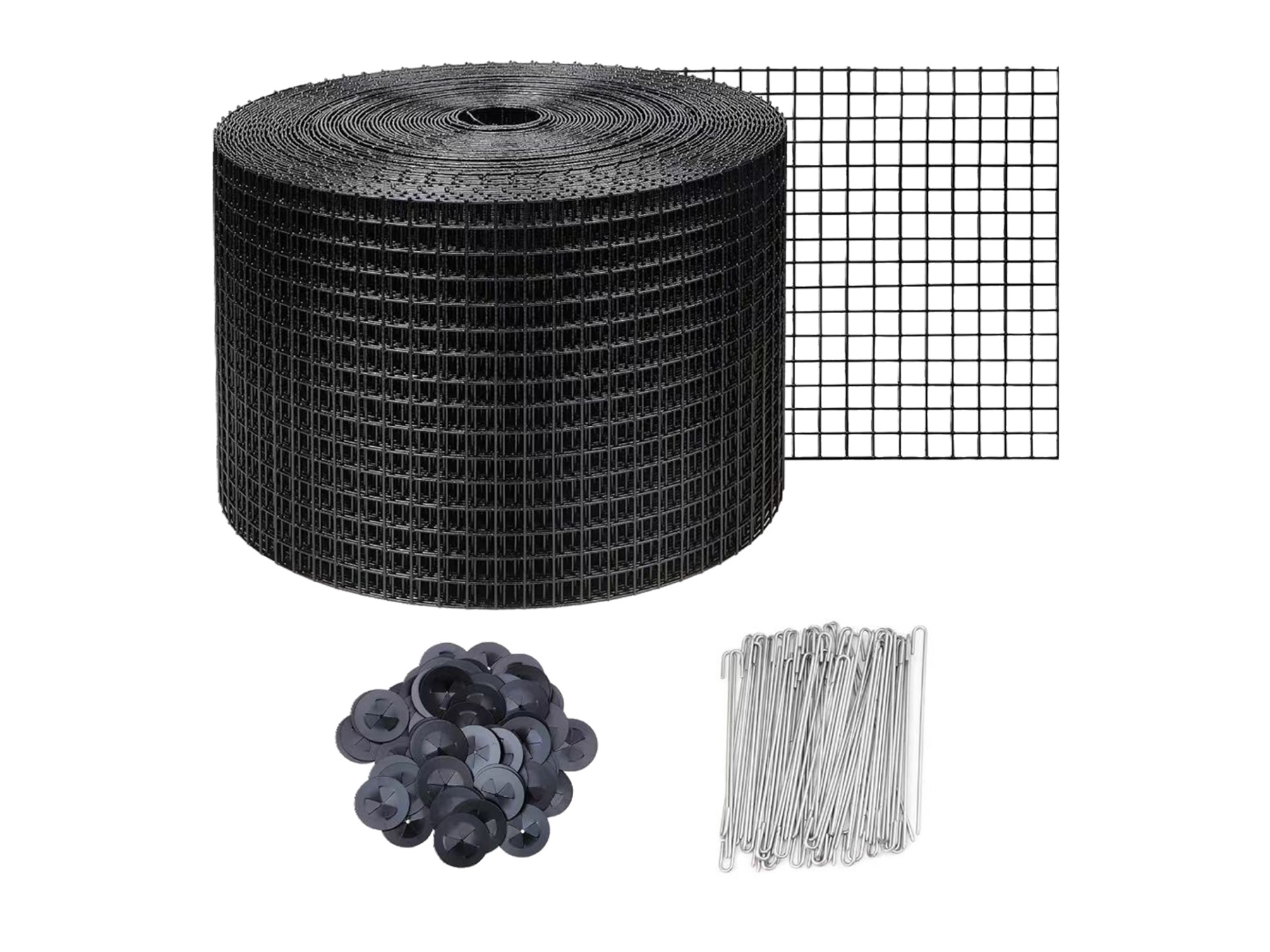
An order covers the mesh roll, the clips that hold the mesh to the panel frame, and the labels and cartons your buyers open on site. The mesh is welded wire with a black PVC coating and a 12.7 mm (1/2″) opening. It closes the gap between the edge of a solar panel and the roof below it, so pigeons and other birds, and rodents such as rats, mice and squirrels, cannot get under the array to nest.
Buyers searching for this item may use different names depending on where they are and who they buy for. The product is sold under descriptions such as solar panel bird mesh, pigeon proofing and solar panel critter guard. It helps to use the term your own customers search for when you list it, and to keep the specification in mm on the trade sheet.
The pests that drive the job are birds such as pigeons, and rodents such as rats, mice and squirrels, all looking for a dry, sheltered gap. The space under a panel array is exactly that. Once a nest is there, droppings build up on the roof surface under the panels, nesting material blocks airflow behind the modules and the array becomes harder and less pleasant to clean. That is why the job is often bundled with panel cleaning or general pest-control visits.
The width you order matters more than the length. A wider roll covers more of the gap between panel edge and roof, which helps on roofs with deep profiles or where panels sit higher off the roof. A narrower roll is easier to handle and speeds up fitting where the gap is small. If the gap is unusually large or the panel sits far from the roof, the mesh is only part of the answer; the installer will need to shape the mesh down to the roof line.
What You Can Customize on a New Zealand Order

Standard sizes cover most roof profiles, but buyers often need something different for a particular customer, and these are the options we make:
- Width: 4″, 5″, 6″ and 8″ (about 100, 125, 150 and 200 mm). Custom widths such as 16″ high are available on request.
- Wire diameter after coating: 1.0 mm, 1.2 mm or 1.3 mm. The 1.0 mm roll is the lightest and packs two rolls per carton; 1.3 mm gives a stiffer edge where the mesh has to hold its shape.
- Material: standard galvanised wire with black PVC coating, or stainless. Stainless can be PVC-coated stainless wire or uncoated 304 stainless. 316 stainless mesh is available with a 25-year warranty (free replacement mesh).
- Roll length: 100 ft (30 m) as standard; custom lengths such as 200 mm × 30 m are available on request.
- Clip sets: stainless steel, aluminium or UV-resistant non-metallic nylon, packed 60, 80 or 100 sets per roll (100 by default).
- Carton branding: a plain carton with your logo sticker is free, and a custom printed colour box is charged at printing cost with no minimum.
If you are deciding between coated steel and stainless for a particular job, our page on PVC-coated steel vs stainless solar bird mesh walks through where each suits.
Options and Specifications
The table below shows the standard combinations we hold as regular lines and where each tends to fit. Sizes outside the table are made on request.
| Option | Wire diameter | Width | Roll length | Where it usually fits |
|---|---|---|---|---|
| Standard galvanised, light | 1.0 mm | 4″ / 6″ / 8″ | 100 ft (30 m) | Flat profiled metal roofs and tighter panel-to-roof gaps; lighter rolls to handle on a ladder |
| Standard galvanised, firm edge | 1.3 mm | 5″ / 6″ / 8″ | 100 ft (30 m) | Deeper tile or corrugated profiles where the mesh must hold shape along the edge |
| Standard galvanised, mid weight | 1.2 mm | 8″ | 100 ft (30 m) | Wide-cover jobs on larger arrays where a 6″ roll leaves too much open gap |
| PVC-coated stainless | Made to order | Standard widths and custom | 100 ft (30 m) | Coastal and high-exposure sites where a coated look and stainless wire are both wanted |
| Uncoated 304 stainless | Made to order | Standard widths and custom | 100 ft (30 m) | Specified stainless mesh jobs where the buyer’s spec calls for 304 |
| 316 stainless | Made to order | Standard widths and custom | 100 ft (30 m) | Sites where a long service life is written into the specification; comes with a 25-year warranty (free replacement mesh) |
All mesh in the table is welded, 12.7 mm (1/2″) opening, with black PVC coating except the uncoated 304 option. Stock regular lines frequently include 6″ and 8″ in 1.0 mm and 1.3 mm galvanised wire, which ship once the order is confirmed. Stainless is made to order from 10 rolls, and 304 and 316 stainless take about one week to produce. 200 mm × 30 m is a common size in Australia and the UK and the 6″ × 100 ft roll is the common US size; we make both, and either can be shipped to New Zealand buyers.
Explore Options
Lightest roll for short runs on flat profiled metal roofs.
Details · Request a Quote
A good all-round domestic width for standard panel-to-roof gaps.
Details · Request a Quote
Wider cover where the panel sits a little higher off the roof.
Details · Request a Quote

Mid-weight wide roll for larger arrays.
Details · Request a Quote

Firmer edge for tighter gaps on tile and deep corrugated profiles.
Details · Request a Quote
Firm-edge standard width for longer domestic runs.
Details · Request a Quote
Stiff wide roll for commercial roofs with deeper gaps.
Details · Request a Quote
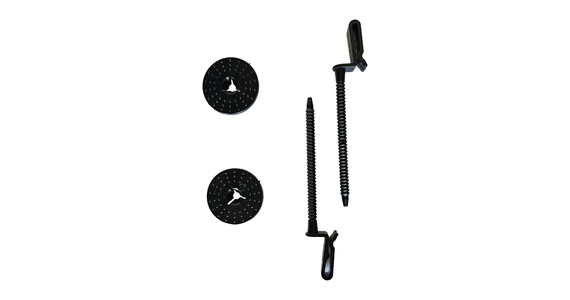
For buyers who work to a metric sheet or a specific roof profile.
Details · Request a Quote
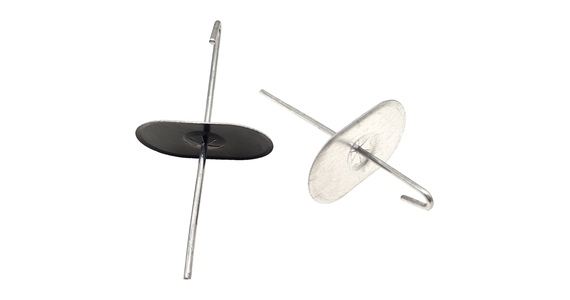
Coastal and exposed sites where coated appearance and stainless wire are both wanted.
Details · Request a Quote
Specified stainless jobs where the buyer’s spec calls for 304.
Details · Request a Quote
Long-life sites where a 25-year warranty is written into the specification.
Details · Request a Quote
Firmest long-term fixing along exposed panel edges.
Details · Request a Quote
A lighter metal fixing for standard installations.
Details · Request a Quote
Non-conductive fixing where installers prefer non-metallic clips.
Details · Request a Quote
Where Solar Panel Bird Mesh Goes
The product is used wherever a solar array leaves a sheltered gap to the roof surface:
- Residential rooftop arrays on profiled metal, tile and long-run metal roofs, where pigeons move in under the panel edge.
- Commercial and rural buildings with larger arrays, where the job is often quoted as part of ongoing building maintenance.
- Existing bracket-mounted arrays where the installer is retrofitting protection during a panel clean or pest visit.
- New-build and re-roof projects where the owner wants protection specified before the array is commissioned.
If you are pitching the job to a commercial client, our page on bird protection on new-build roofs sets out the arguments for including it at install stage. For installers running domestic routes, how to stop birds nesting under solar panels covers the customer conversation and the usual complaint patterns.
Key Trade-offs When Choosing
Most specification choices on a New Zealand order come down to four trade-offs. None has a single right answer; each depends on the site.
Roll width. A wider roll covers more of the gap between panel edge and roof, which helps on deeper tile profiles and on arrays mounted high off the roof. A narrower roll is easier to handle and speeds up fitting on flatter profiled metal roofs where the gap is small. If the gap is unusually large or the panel sits far from the roof, the mesh is only part of the answer; the installer will need to shape the mesh down to the roof line.
Wire diameter. The 1.0 mm mesh is the lightest and easiest to work on a ladder; the trade-off is that it flexes more. 1.3 mm holds its shape better along a long panel edge and on exposed sites. If installers mostly fit short runs on domestic roofs, 1.0 mm is usually the simplest choice; for longer runs on commercial roofs, the firmer 1.3 mm helps the finished edge look clean.
Galvanised or stainless. Galvanised mesh with black PVC coating is the standard choice and covers most inland and suburban addresses. On properties close to the coast, stainless is the more durable option, and 316 stainless carries a 25-year warranty (free replacement mesh). Note that the 25-year warranty applies to 316 stainless mesh only, not to galvanised or 304 mesh. We take care to write that correctly on the trade sheet because buyers sometimes assume the warranty applies across the range.
Clip material and count. Stainless, aluminium and nylon clips all do the same job of holding the mesh to the panel frame, and the choice depends on finish and handling. Stainless gives the firmest long-term fix on exposed edges; aluminium is lighter; nylon is non-metallic, UV-resistant and useful where the installer wants a non-conductive fixing. The default pack is 100 sets per roll. If your installers fit on wide panels with more clips per metre, order 80 or 100 sets rather than 60 so they do not run short. If you are weighing clip types, see this guide to clip sets for solar bird mesh.
A common mistake is to order one width for every job on the round. The cleaner approach for a trade buyer is to stock two widths (say 6″ and 8″) and two wire diameters, then quote the wider roll for tile roofs and the narrower one for profiled metal. That keeps stock turnover sensible without leaving the installer fitting a roll that does not reach the roof line.
Packing, Lead Time and Fitting
Packing depends on wire diameter. 1.0 mm rolls are packed two rolls per carton; 1.3 mm rolls are one roll per carton. Orders under 50 rolls ship in cartons, and 50 rolls and above go on pallets. Each carton carries a plain label with your logo sticker at no charge; a custom printed colour box is charged at printing cost with no minimum. Clip sets are packed with the roll at 60, 80 or 100 sets. The exact carton dimensions for the 1.0 mm two-roll carton are not yet fixed, so if a freight forwarder asks for those, we will confirm and get back to you.
Payment for a New Zealand order can be PayPal for small orders or bank transfer, and larger orders can run 30% deposit with 70% before shipping. We do not offer cash on delivery. Orders can be quoted DDP, which means door-to-door delivery with duties paid; freight is quoted as a separate line with its own amount. Request a delivered (DDP) quote for New Zealand and we will price it against your address and order size.
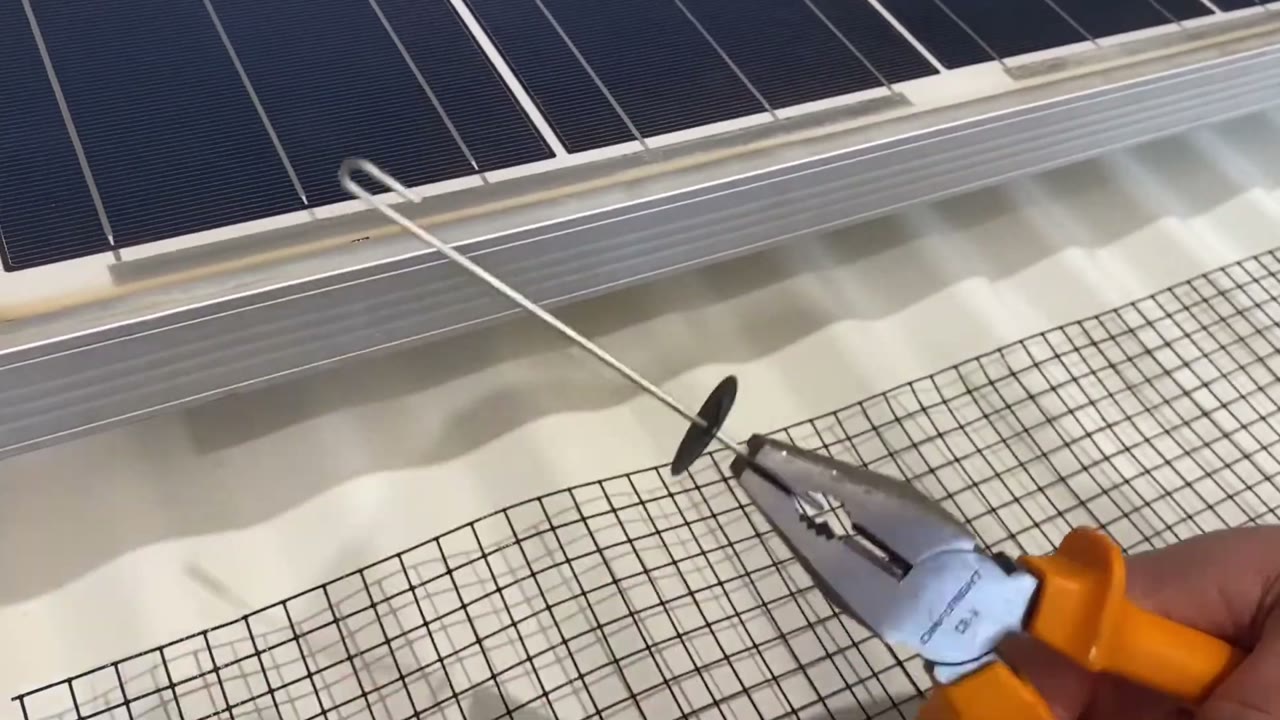
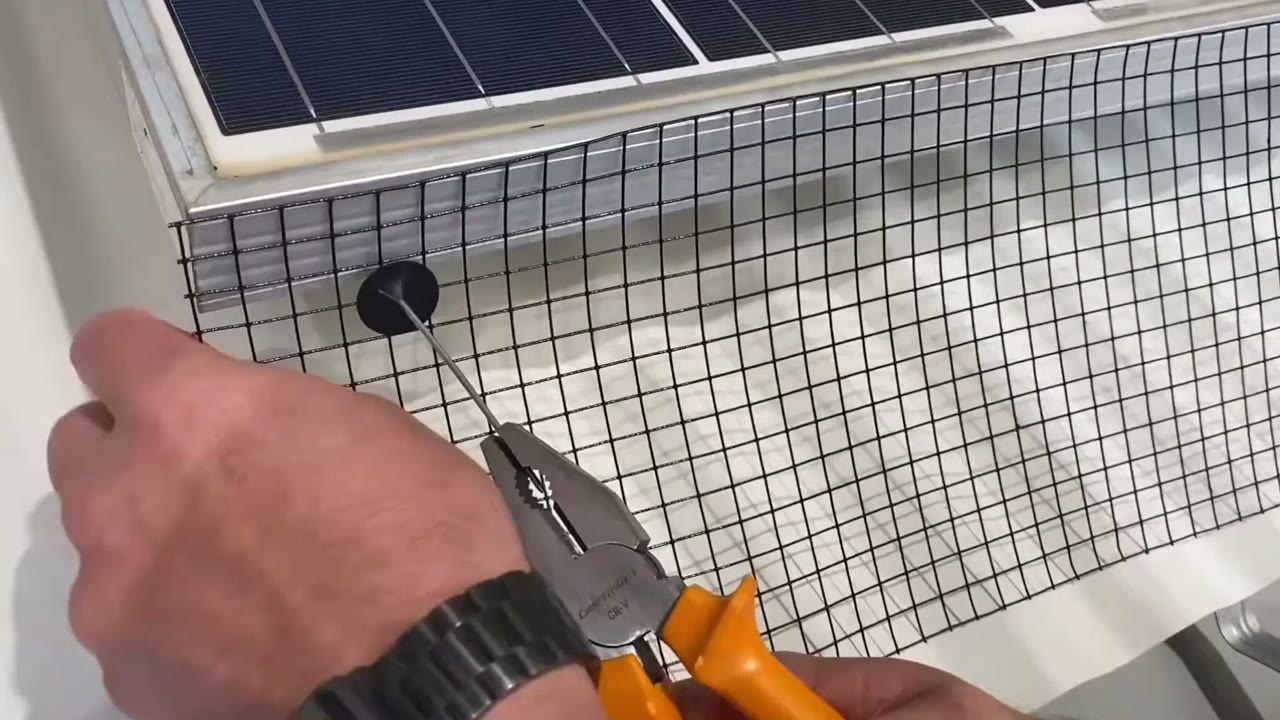
Fitting in New Zealand follows the same method installers use elsewhere: the mesh is cut to length, set flush to the roof line under the panel edge, and fixed to the panel frame with clips passed through the mesh. The clip hooks onto the panel frame and a retaining disc holds the mesh tight to the frame. Mesh should sit against the roof surface so birds and rodents cannot push under the bottom edge; leave no finger-width gaps at corners or at the ends of the run. Installation videos and written guidance are available to pass on to your installers, and our installation guide covers the sequence.
Two rules apply to every job: follow the solar panel maker’s instructions, particularly on anything that touches the panel frame, and follow local safety rules for working at height. Work from a safe position with the array isolated as site rules require; never lift a panel or drill a module to fit the mesh. If you are fitting on a roof profile or frame type you have not seen before, our page on clips for frameless panels sets out the complications.
How a Custom Order Works
Custom New Zealand orders run in the same steps as our other export orders:
- Specification. You send the width, wire diameter, material, roll length and clip type you want, with quantities per line. Custom widths such as 16″ high can be quoted on request.
- Quote. We quote the goods and freight as separate lines in writing. You can start that with a quote request.
- Sample. One roll is free, with freight paid by the buyer; in-stock samples ship the same day. For stainless and custom specs, allow production time before dispatch.
- Production and packing. Stock regular lines ship once the order is confirmed; stainless takes about one week to produce. We pack per the carton and pallet rules above and apply the logo sticker.
- Shipping. We ship DDP for New Zealand on request, so the rolls arrive at your site with duties paid.
Minimum order is 10 rolls for stock sizes and you can mix sizes to reach it. Stainless is made to order from 10 rolls, and 3 rolls cannot be made. The minimum keeps the carton and freight cost realistic for a small trade buyer, and mixing sizes means you can trial two or three widths in one order before committing to a larger run. If you want to test before ordering on a New Zealand scale, our sample and MOQ page sets out how that works.
If you sell under your own brand, OEM and private label covers the logo sticker and custom printed box options. Distributors and wholesalers often ask whether we supply other factories in China; we do, and it is a fair sign the specification is a standard trade one, but the products go out under your own label.
What to Tell Us When You Ask for a Quote
Send these details and we can quote accurately in one pass:
- Size mix: width in inches or mm, wire diameter, and whether you want galvanised or stainless (and 304 or 316 if stainless).
- Roll length: 100 ft (30 m) or a custom length.
- Quantity: rolls per line and total rolls, including whether you will mix sizes to reach the MOQ of 10 rolls.
- Clip type and count: stainless, aluminium or nylon; 60, 80 or 100 sets per roll.
- Branding: whether you want the free logo sticker, a custom printed colour box, or plain cartons.
- Packing: whether your order will be under or over 50 rolls.
- Delivery country and address: New Zealand, with the town or city and whether you need DDP delivery to your door.
- Payment method: PayPal, bank transfer, or deposit and balance before shipping.
If you buy for installers, tell us whether a sample roll is needed first, and whether the first order is a trial for a specific customer or a stocking order for distribution. If you are comparing suppliers, our page on who we are as a solar bird mesh manufacturer explains our factory, and wholesale supply for installers and distributors shows how trade orders are structured in the region. When you have those details together, send them through our quote request page and we will come back with goods and freight priced separately.
FAQ
Do you supply solar panel bird mesh to New Zealand?
Yes. We are a manufacturer and supply trade buyers in New Zealand. Orders can be quoted DDP to a New Zealand address, so request a delivered (DDP) quote for New Zealand and we will price it against your address and order size.
What sizes are standard for a New Zealand order?
Widths are 4", 5", 6" and 8" in 100 ft (30 m) rolls, with 1.0 mm, 1.2 mm or 1.3 mm wire and a 12.7 mm (1/2") mesh opening. 200 mm × 30 m is a common size in Australia and the UK and we make it; custom widths such as 16" high are available on request.
What is the minimum order?
The minimum is 10 rolls for stock sizes, and you can mix sizes to reach it. Stainless is made to order from 10 rolls, and 3 rolls cannot be made.
How long does delivery to New Zealand take?
We quote New Zealand delivery individually, so request a delivered (DDP) quote for New Zealand and we will price it against your address and order size. Freight is shown as a separate line in the quote.
Which mesh should I stock for coastal New Zealand properties?
Galvanised PVC-coated mesh covers most inland and suburban sites. For properties close to the coast, stainless mesh is the more durable option, and 316 stainless mesh carries a 25-year warranty (free replacement mesh); the warranty applies to 316 only, not galvanised or 304.
Can I have my own logo on the cartons?
Yes. A plain carton with a logo sticker is free, and a custom printed colour box is charged at printing cost with no minimum. Tell us which you want when you ask for a quote.
How is the mesh packed and how many clips come with each roll?
1.0 mm rolls are packed two per carton and 1.3 mm rolls one per carton; orders under 50 rolls ship in cartons and 50 rolls and above go on pallets. Each roll comes with 60, 80 or 100 clip sets, 100 by default.
Can I get a sample before ordering?
Yes. One roll is free and the buyer pays freight; in-stock samples ship the same day. Stainless and custom specifications need production time before dispatch.
Request a Quote
Send your drawing or size list, the quantity and the delivery country, and we will reply with options and a quote. Request a quote.