
United States: Critter Guard Solar Panel Mesh Supply
Short answer: for critter guard USA orders, buy from the manufacturer: welded 1/2" (12.7 mm) black PVC-coated mesh in 4", 5", 6" and 8" widths, 100 ft (30 m) rolls, with stainless, aluminium or nylon clip sets per roll. The 6" × 100 ft roll is the size most often sold in the US market. Minimum order is 10 rolls for stock sizes, mixed sizes allowed, and we quote door-to-door (DDP) delivery with freight shown as its own line.
What a critter guard USA order covers
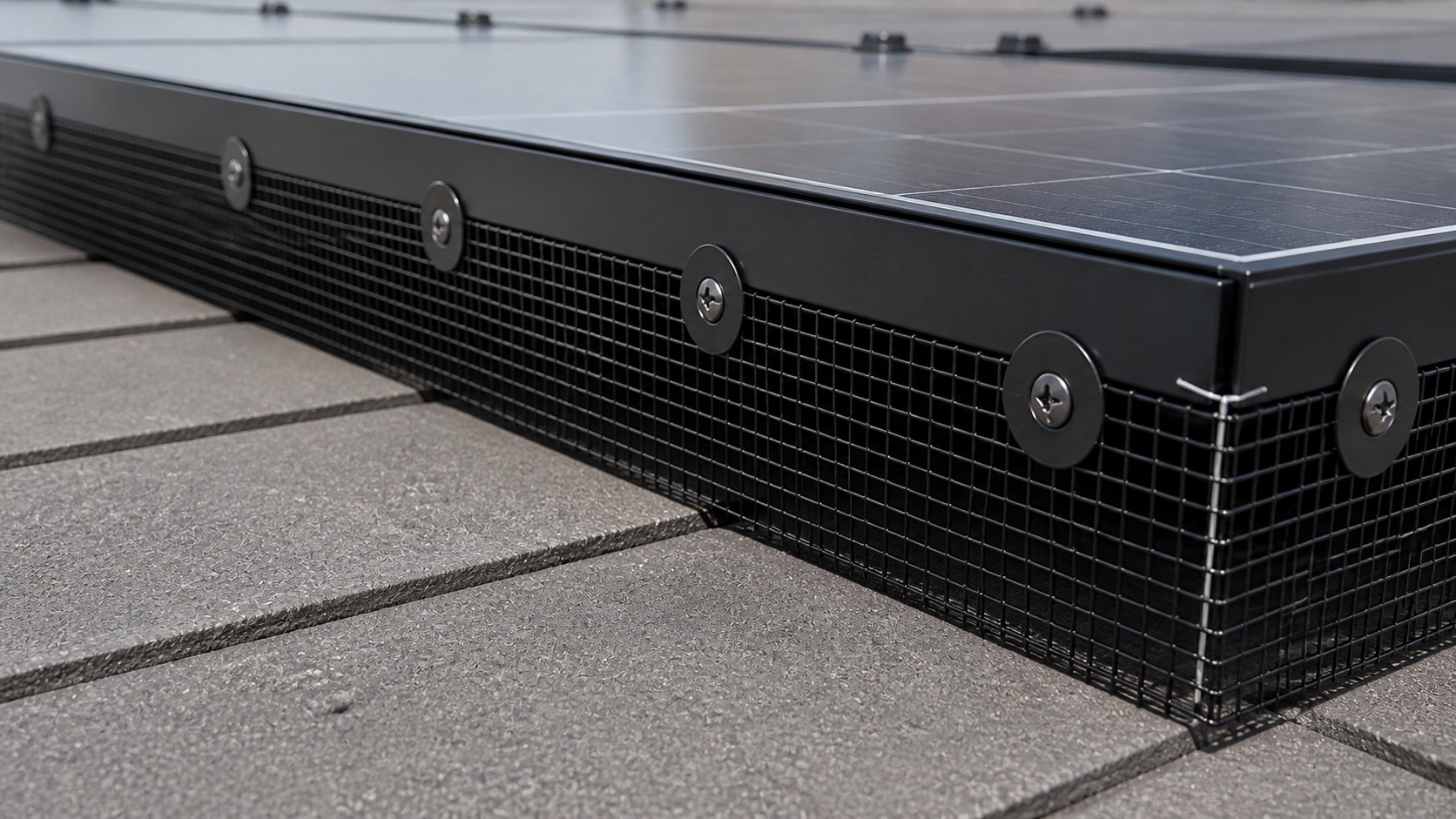
In the United States, trade buyers usually call this material a critter guard, a solar panel critter guard, or a squirrel guard. It is the same item under all three names: a roll of welded wire mesh, 1/2" (12.7 mm) opening, black PVC coated, sized to close the gap between the solar panel frame and the roof so birds and rodents cannot nest under the array.
When you place an order, the roll is the core item and the clips come with it. Each roll is packed with 60, 80 or 100 clip sets, and 100 sets is the default. You choose the clip material: stainless steel, aluminium, or a UV-resistant non-metallic nylon. So a typical US order is mesh plus matching fasteners, packed as a kit your installers can open on the roof.
We are the manufacturer, not a trading company. The factory is in Anping County, Hebei, China’s main wire mesh production area, and the wire mesh is made there.
What you can customize for the US market
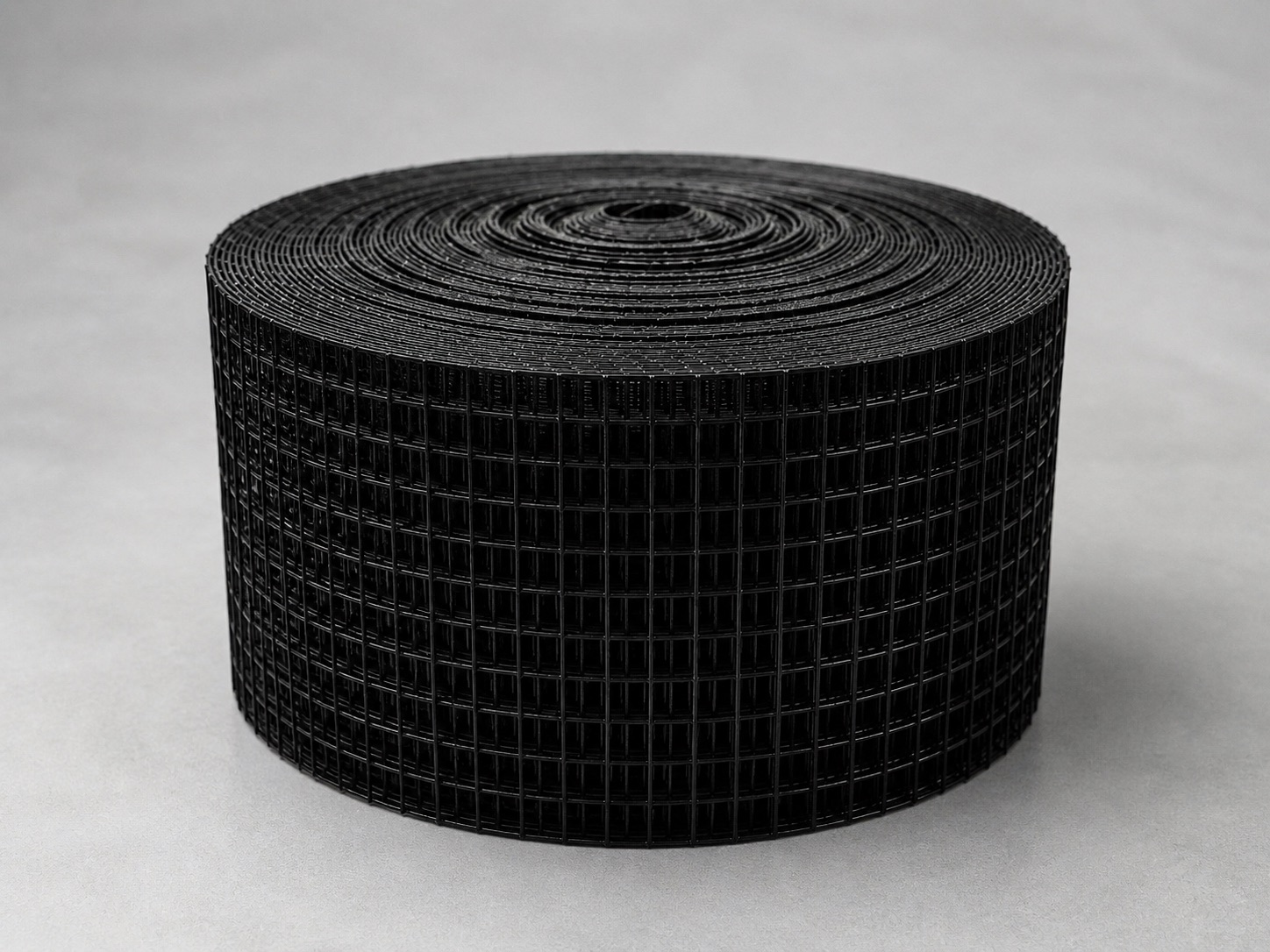
Wire diameter. Choose 1.0 mm, 1.2 mm or 1.3 mm after coating. All three are standard options; the choice comes down to the specification your customers ask for and the roll weight you want to ship and stock.
Width. 4" (about 100 mm), 5" (about 125 mm), 6" (about 150 mm) and 8" (about 200 mm). In the US market, 6" is the width most often specified; 8" is the other stock width.
Material. Standard is galvanised wire with black PVC coating. Stainless steel is available as PVC-coated stainless wire or uncoated 304 stainless. 316 stainless mesh can be supplied with a 25-year warranty (free replacement mesh). Galvanised mesh does not carry that warranty, and neither does 304.
Clip sets. Stainless J-hook wire with a black retaining disc, in large or small disc; aluminium; or nylon. You can also take 60 or 80 sets instead of 100 if your market sells mesh and fasteners separately.
Packing. A plain carton with your logo sticker is free. A custom printed colour box is charged at printing cost with no minimum. For wholesalers, the printed box is often the difference between a commodity roll and a shelf item.
Options and specifications

| Option | Sizes | Where it fits |
|---|---|---|
| Galvanised, PVC coated, 1.0 mm | 4" (100 mm), 6" (150 mm), 8" (200 mm) × 100 ft (30 m) | Standard stock line in the lightest gauge |
| Galvanised, PVC coated, 1.2 mm | 8" (200 mm) × 100 ft (30 m) | Wider gaps where a mid-gauge roll is wanted |
| Galvanised, PVC coated, 1.3 mm | 5" (125 mm), 6" (150 mm), 8" (200 mm) × 100 ft (30 m) | Firmer gauge for crews that handle mesh repeatedly |
| PVC-coated stainless wire | Made to order, from 10 rolls | Black finish with stainless corrosion behaviour |
| Uncoated 304 stainless | Made to order, from 10 rolls | Inland and non-coastal sites where bare metal is preferred |
| 316 stainless | Made to order, from 10 rolls | Coastal exposure; carries 25-year warranty (free replacement mesh) |
| Stainless clip sets | 100 sets ≈ 0.5 kg; large or small disc | Default choice on most installs |
| Aluminium clip sets | 100 sets ≈ 0.7 kg | Installers who want a metal fastener at lower weight than stainless |
| Nylon clip sets | 60, 80 or 100 per roll | UV-resistant, non-conductive fixing on metal frames |
| Custom sizes | e.g. 16" high, or 200 mm × 30 m | Commercial arrays and oversized standoffs, quoted per order |
Mesh opening is 1/2" (12.7 mm) on every option. Roll length is 100 ft (30 m) as standard. The seven routine sizes are 1.0 mm × 4/6/8", 1.3 mm × 5/6/8" and 1.2 mm × 8".
Explore Options
Lighter roll for narrower gaps on residential arrays.
Details · Request a Quote
The US market width most often specified, in a stock gauge.
Details · Request a Quote
Wider stock width for deeper gaps.
Details · Request a Quote

Firmer gauge for crews that handle mesh repeatedly.
Details · Request a Quote
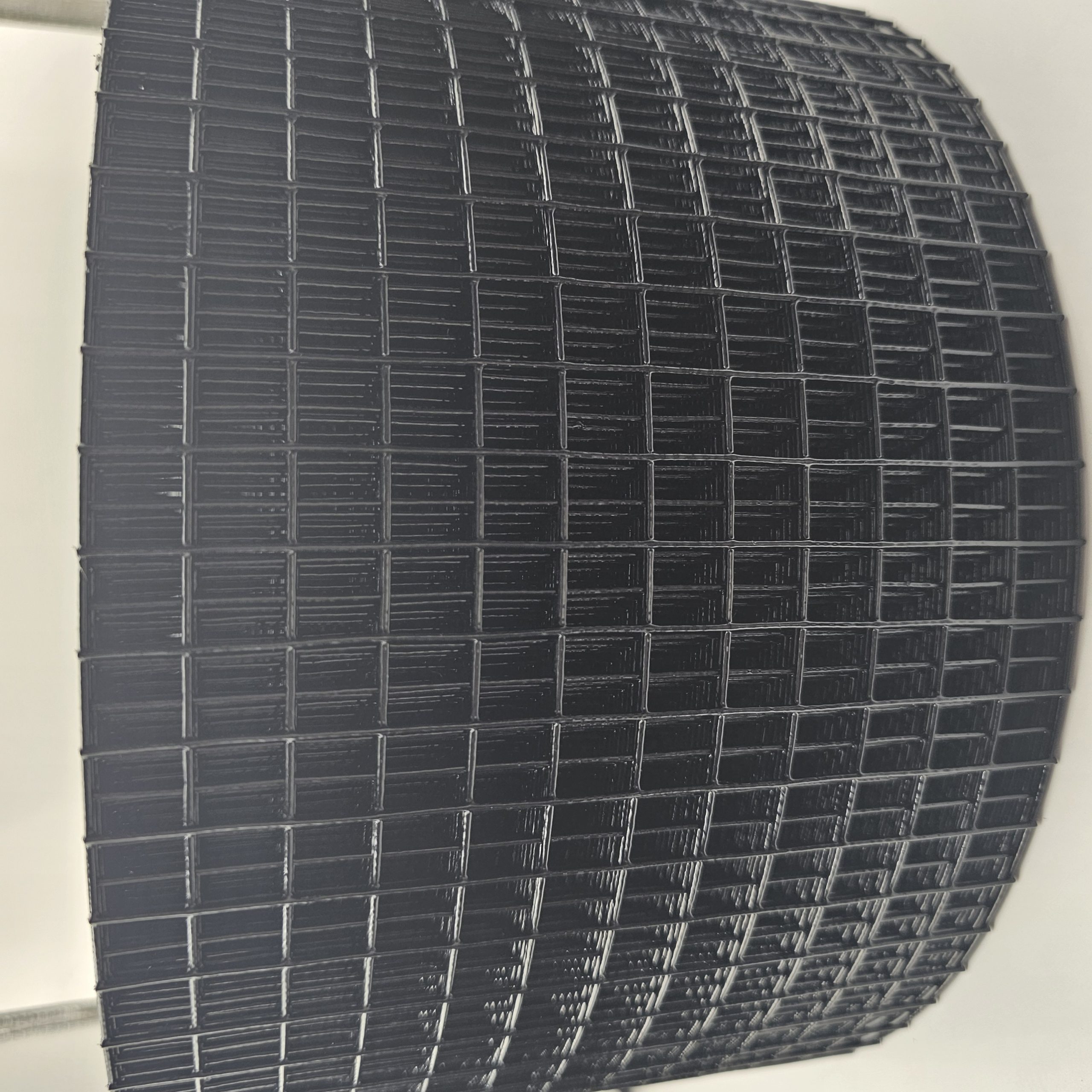
Stock width in the firmer gauge for pest-control work.
Details · Request a Quote
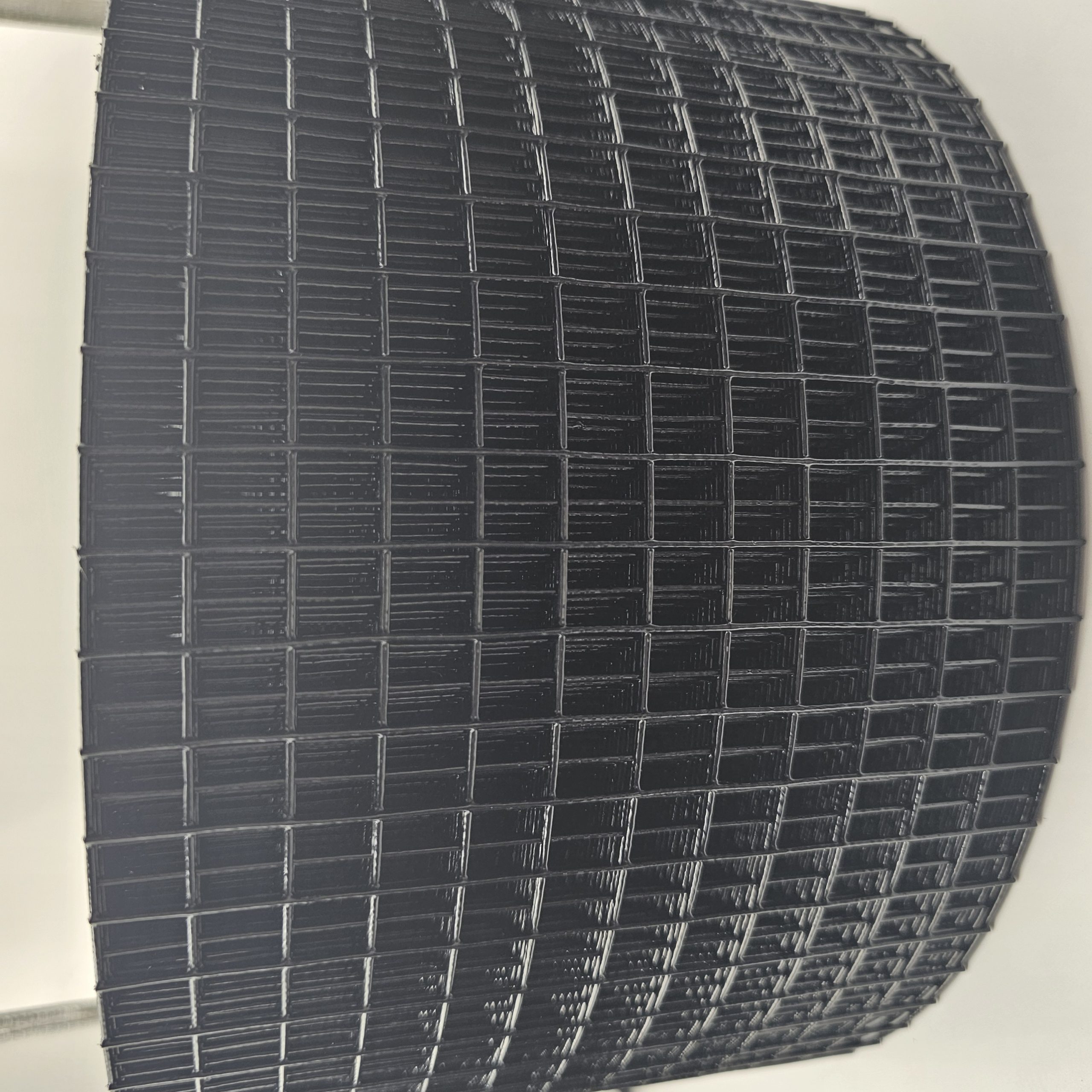
Wide, firm edge on commercial and deep-gap arrays.
Details · Request a Quote
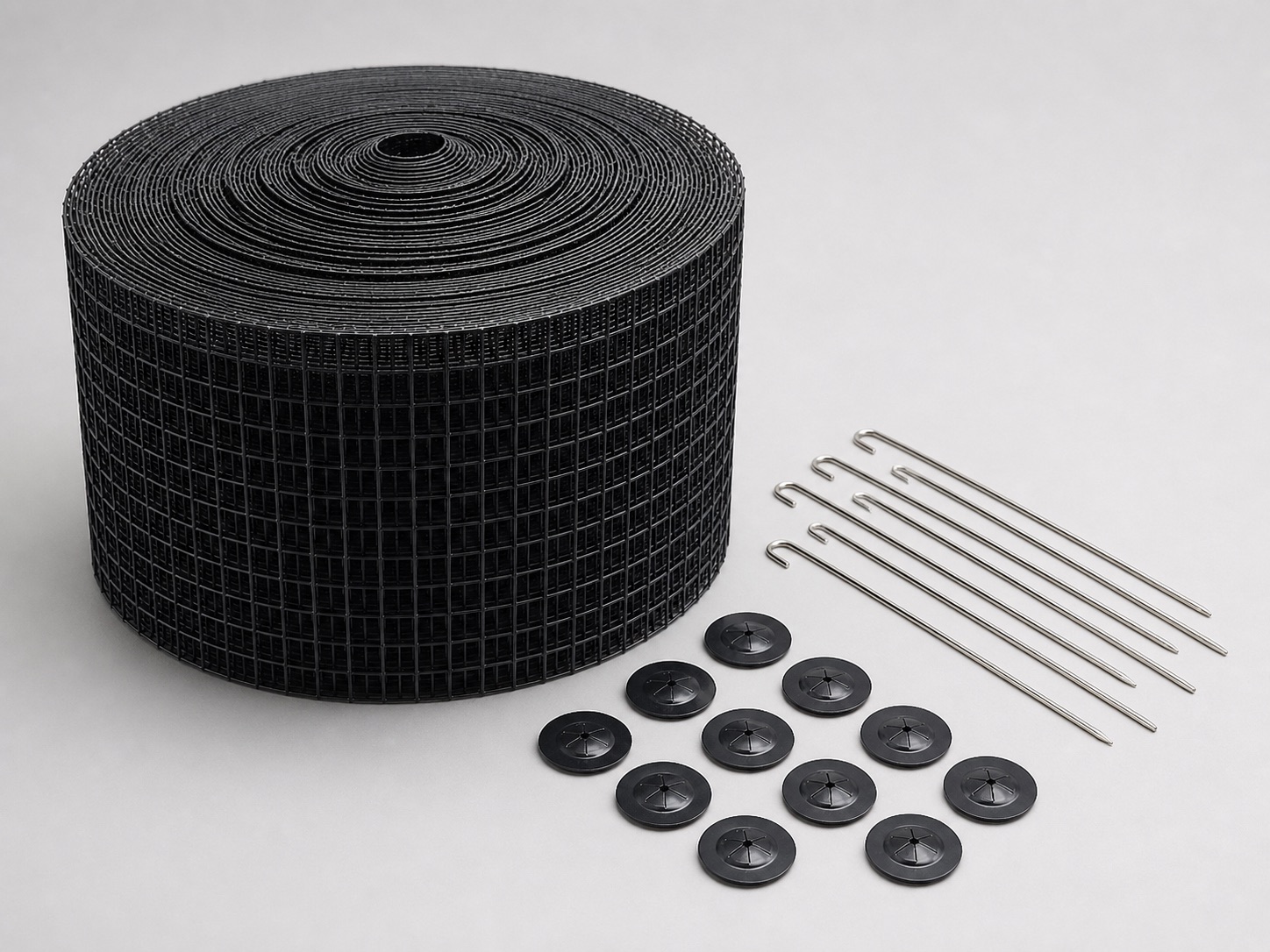
Middle gauge in the widest standard width.
Details · Request a Quote

Black finish with stainless corrosion behaviour for coastal roofs.
Details · Request a Quote

Bare metal finish for inland sites.
Details · Request a Quote
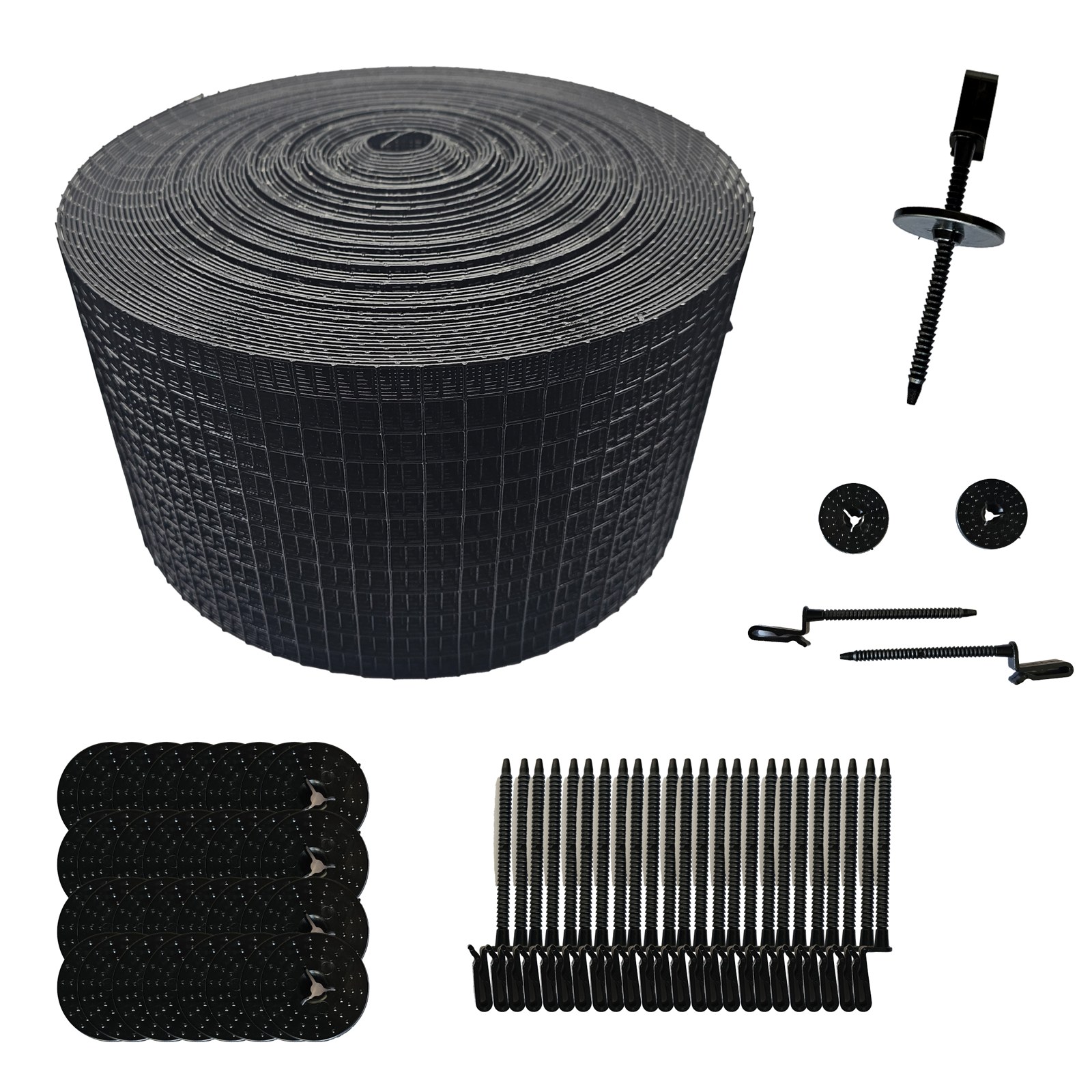
For coastal exposure where the warranty matters to the end customer.
Details · Request a Quote
Default fastener on most US installs.
Details · Request a Quote
Metal fastener at lower weight than stainless.
Details · Request a Quote
UV-resistant, non-conductive fixing near electrical parts.
Details · Request a Quote
Quoted per order for commercial arrays and oversized gaps.
Request a Quote
Where it is used across US rooftop solar
On US homes the pests behind most call-backs are pigeons, squirrels and roof rats. The mesh closes the gap under the panel edge and down to the roof, blocking the space where these animals would otherwise nest.
Roof types vary across the country, from shingle and metal to tile and flat commercial decks. The mesh runs along the panel edge and drops to the roof surface, and the fixing is made from clip to panel frame. On tile or uneven surfaces, installers shape the roll to follow the roof line. Whatever the roof, follow the panel maker’s instructions and local safety rules for work at height, and check anything that could affect the panel warranty with the maker first.
Trade buyers in the US fall into a few clear groups. Solar installers add critter guard to the original job. Solar cleaners and maintenance firms sell it after a cleaning visit when they see nesting. Pest-control companies use it as the long-term fix once a bird problem is cleared. Distributors and wholesalers stock rolls and clip sets for all of the above. If you sell mainly to maintenance crews, the pest-control supply range shows how kits are put together; if you stock for installers, start with the US installer supply page.
Key trade-offs when choosing
Galvanised versus stainless. Galvanised with black PVC coating is the volume choice and what most US orders are built on. Stainless is worth the step up if the roof is coastal or the array sits near salt spray; for inland roofs the difference in service behaviour is smaller. Remember that only 316 carries the 25-year warranty (free replacement mesh). See the coated steel versus stainless comparison before you set your product line.
1.0 mm versus 1.3 mm. 6-inch and 8-inch widths in 1.0 mm and 1.3 mm galvanised wire are held in stock and ship once the order is confirmed; other sizes are made to order, so the choice depends on the specification your customers want and the roll weight you prefer to handle. The 1.0 mm roll is lighter to ship and stock; the 1.3 mm roll is the firmer gauge. Neither suits every buyer; match the gauge to how the roll will be handled on site and what your customers ask for.
Clip material. Stainless is the default because it matches the job’s life. Nylon is a sensible choice where the fixer is working near electrical components and wants a non-conductive fastener. Aluminium sits between the two. Whichever you pick, keep the set count consistent per roll so a kit never arrives short.
Width. Buying one width keeps stock simple but forces installers to cut on site. Carrying 6" as the main line and 8" for wider gaps covers most US work; 4" and 5" remain available for narrower gaps. The width guide sets out how to match width to the gap you are closing.
Common mistakes. Ordering mesh without counting clips; specifying a heavier wire for handling reasons and then finding crews want the lighter roll; quoting a custom width without checking the roll weight. Fit quality also matters more than mesh gauge — mesh that sits proud of the roof leaves a gap at the bottom, and mesh fixed too loosely works loose over time. Roof work should follow the panel maker’s instructions and local safety rules, and anything affecting panel warranty should be checked with the panel maker first.
Packing, lead time and fitting in the US
Packing follows wire diameter. The 1.0 mm roll ships two per carton, so 10 rolls are 5 cartons. The 1.3 mm roll ships one per carton: 1.3 mm × 5" is 300 × 300 × 130 mm at 3.8 kg, 1.3 mm × 6" is 300 × 300 × 160 mm at 4.5 kg, and 1.3 mm × 8" is 300 × 300 × 210 mm at 5.8 kg, all excluding clips. Roll weights excluding clips are 1.0 mm × 4" 1.75 kg, 1.0 mm × 6" 2.6 kg, 1.0 mm × 8" 3.4 kg, and 1.2 mm × 8" 4.5 kg. Orders under 50 rolls go in cartons; 50 rolls and above go on pallets.
We quote DDP delivery, with duties paid and delivery to your door, and freight shown as its own line. The sea transit estimates from our forwarder, counted after sailing and not promised dates, are: Los Angeles 20–26 days fast or 28–35 days standard; New York 38–48 days; Dallas and Chicago 28–36 days fast or 36–45 days standard. These figures cover the sea leg only; production and booking sit in front of them. The shipping and DDP page explains how the terms work.
Fitting on US arrays is straightforward. The clip hooks over the panel frame, passes through the mesh, and a retaining disc presses the mesh tight against the frame; the mesh drops flush to the roof along the lower edge. The mesh is cut to length and bent on site, and the wire ends are trimmed with pliers. Installation videos and written instructions are available. Our installation resources cover the sequence, and the critter guard fitting page walks through common roof contacts.
How a custom order works
Stock sizes ship once the order is confirmed. The 6" and 8" widths in 1.0 mm and 1.3 mm galvanised wire are held in stock; check current stock before you promise a date to a customer. Stainless is made to order from 10 rolls and takes about one week to produce for both 304 and 316.
Custom widths, such as 16" high or 200 mm × 30 m, are quoted per order. You send the size, we confirm the roll weight and packing, and production is scheduled. If you want your own printed colour box, artwork goes onto a plain carton at printing cost, with no minimum order for the printing. A logo sticker on a plain carton is free.
Payment is by PayPal for small orders or company bank transfer; larger orders run 30% deposit with 70% before shipping. Cash on delivery is not accepted. One roll can be sent as a free sample with the buyer paying freight, and stock samples ship the same day. The sample and MOQ page sets out how samples work alongside the 10-roll minimum. If you want your own brand on the carton, see OEM and private label.
What to tell us when you ask for a quote
Give us these details in one message and the quote comes back complete:
- The US names you sell under — critter guard, solar panel critter guard, squirrel guard — so the packing line matches your market.
- Wire diameter: 1.0 mm, 1.2 mm or 1.3 mm; and material: galvanised PVC coated, coated stainless, 304 or 316.
- Width in inches and roll length; say if you need a custom width such as 16".
- Number of rolls, and how many mix across sizes.
- Clip material — stainless, aluminium or nylon — and sets per roll, 60, 80 or 100.
- Delivery country and ZIP code or destination port, so the DDP quote is accurate for Los Angeles, New York, Dallas or Chicago.
- Packing: plain carton with logo sticker, or custom printed colour box.
- Any target delivery date, so we can say what is achievable against production and sailing.
For the full line-up behind these options, see the critter guard mesh trade buyer guide, the clip sets guide, and the wholesale range. To start an order, use the quote request form.
FAQ
What mesh size is standard for critter guard in the United States?
The 6" × 100 ft roll is the size most often sold in the US market. The mesh opening is 1/2" (12.7 mm) and every roll is black PVC coated over galvanised wire unless you specify stainless.
What is the minimum order?
10 rolls for stock sizes, and you can mix sizes to reach it. Stainless steel is made to order from 10 rolls.
How long does delivery to the US take?
On DDP terms the sea transit, counted after sailing, is 20–26 days fast or 28–35 days standard to Los Angeles, 38–48 days to New York, and 28–36 days fast or 36–45 days standard to Dallas or Chicago. These are forwarder estimates, not promised dates, and production and booking come before the sea leg.
Which clip material should I order?
Stainless is the default and suits most installs. Nylon is UV-resistant and non-conductive, which suits work near electrical components, and aluminium sits between the two. Each roll carries 60, 80 or 100 sets, with 100 as standard.
Is the mesh covered by a warranty?
316 stainless mesh can be supplied with a 25-year warranty (free replacement mesh). Galvanised mesh and 304 stainless do not carry that warranty.
Can I get a sample before ordering?
Yes. One roll is free and the buyer pays freight, and stock samples ship the same day.
Can the cartons carry my own brand?
Yes. A plain carton with your logo sticker is free, and a custom printed colour box is charged at printing cost with no minimum.
How is the mesh fixed to the panel frame?
The clip hooks over the panel frame, passes through the mesh, and a retaining disc presses the mesh against the frame, with the mesh running flush to the roof. Follow the panel maker's instructions and local safety rules for roof work and to protect the panel warranty.
Request a Quote
Send your drawing or size list, the quantity and the delivery country, and we will reply with options and a quote. Request a quote.