
Critter Guard Clips for Solar Panel Bird Mesh
Short answer: Critter guard clips are the small fittings that hold solar panel bird mesh tight against the panel frame. We supply them in three materials — stainless steel, aluminium and nylon — and each roll of mesh comes with 60, 80 or 100 clip sets, 100 by default. The stainless clip is a J-shaped hook wire with a black retaining disc in a large or small size; the aluminium and nylon types are the alternatives for crews who want a different fixing method or a non-metallic option. Choose the clip to suit your frame, your climate and how your installers like to work, then match it to the mesh width and wire diameter you are buying.
What This Critter Guard Clips Order Covers

A clips order is not a separate line sitting in a warehouse. Clips travel with the mesh. Every roll we ship is packed with a set of clips, and the buyer chooses 60, 80 or 100 sets per roll. The default is 100 sets, which leaves a little spare on each roll for dropped or bent pieces.
So a typical trade order for a given number of rolls also covers that number multiplied by the clip count per roll. That is the practical way to think about it: clips are ordered in proportion to mesh, not on their own. If you run your own kits or repack for retail, you can change the clip count per roll, and you can also mix clip materials across one order as long as the quantity makes sense for production.
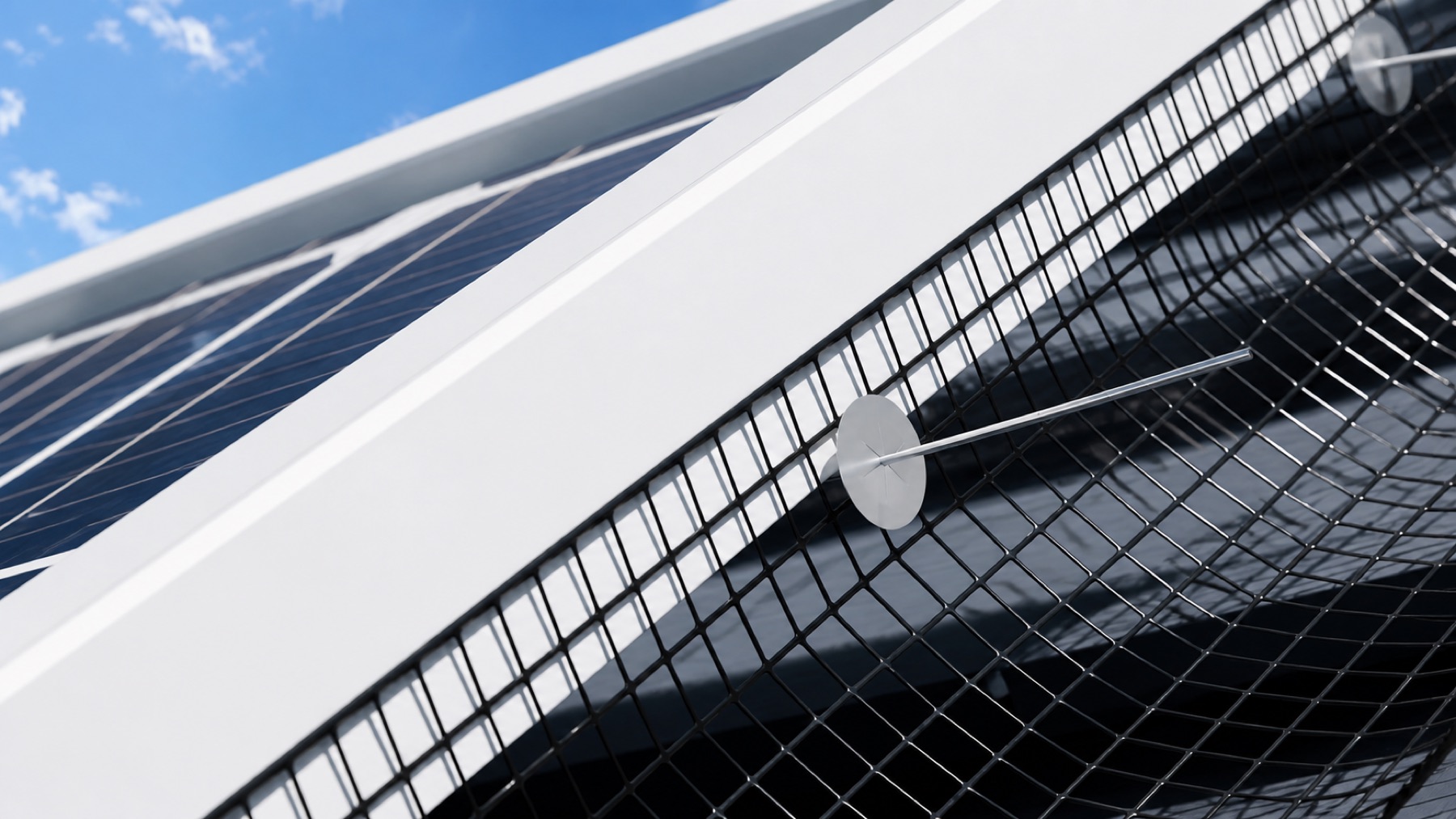
The clip set is what turns a cut length of mesh into a finished guard. The mesh closes the gap between the panel edge and the roof; the clip is what holds the mesh to the frame without drilling. That is why the clip choice matters as much as the mesh choice — a good clip on the wrong frame is a call-back, and a cheap clip on a coastal roof is a rust complaint six months later.
What You Can Customize in Critter Guard Clips
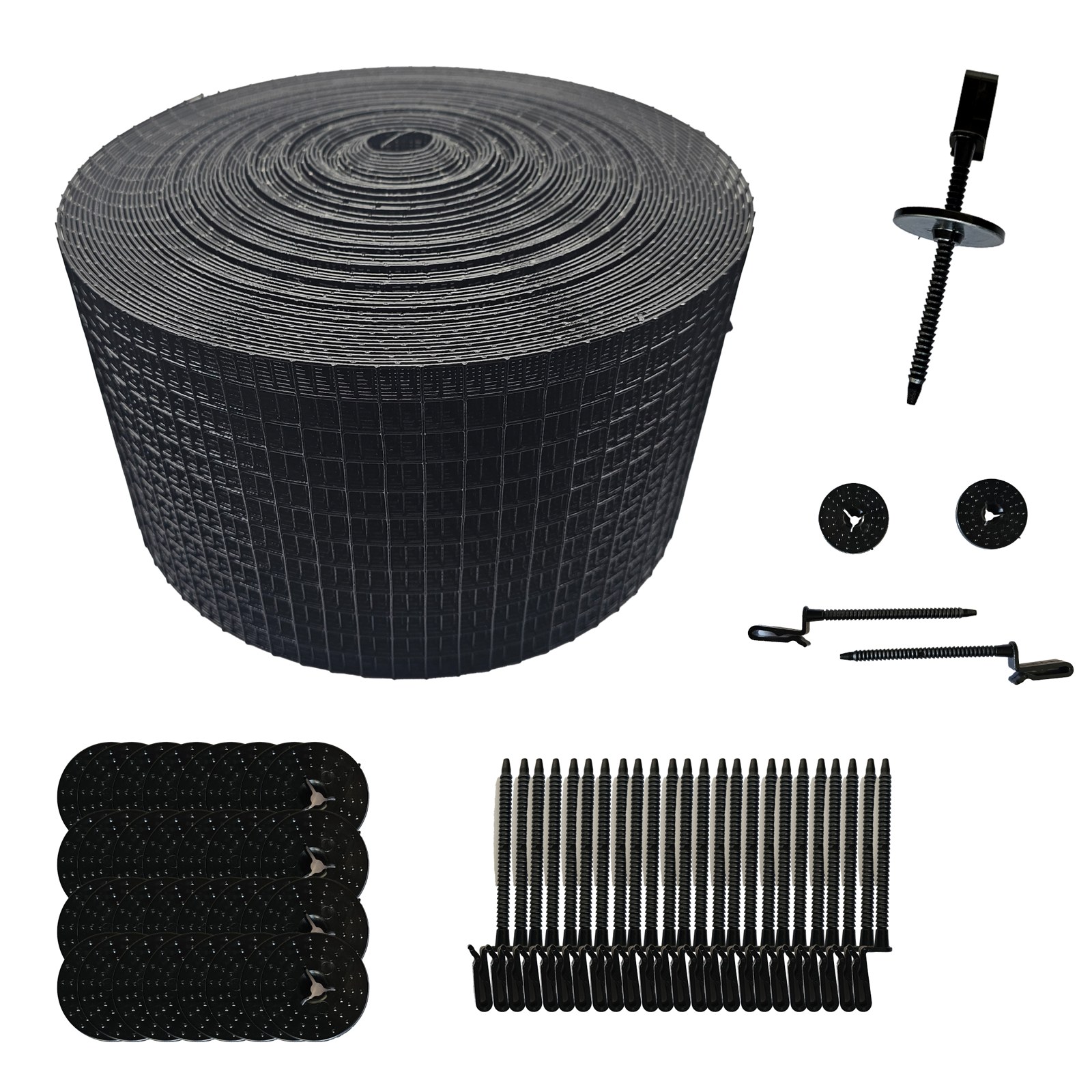
Material. There are three options. Stainless steel is one of the three clip materials and is used on long runs, coastal and humid sites and kits sold on durability. Aluminium is a metal option that uses a clip with a washer. Nylon is non-metallic, UV-resistant and non-conductive.
Disc size on stainless clips. The stainless clip is a J-shaped stainless hook wire plus a black retaining disc with a star cut in the centre. The disc comes in large and small.
Clip quantity per roll. 60, 80 or 100 sets. The default is 100.
Weight. 100 stainless sets weigh about 0.5 kg and 100 aluminium sets about 0.7 kg. That matters when you are costing freight and when you are checking carton weights for a distributor order.
What you cannot change is the fundamental job: the clip holds mesh to the panel frame. Nothing in the range is a roof-penetrating fixing, and nothing replaces correct mesh sizing. If you need to understand how clips sit against different frames, the solar panel mesh clips page and the critter guard installation guide are the two places to start.
Options and Specifications of Critter Guard Clips
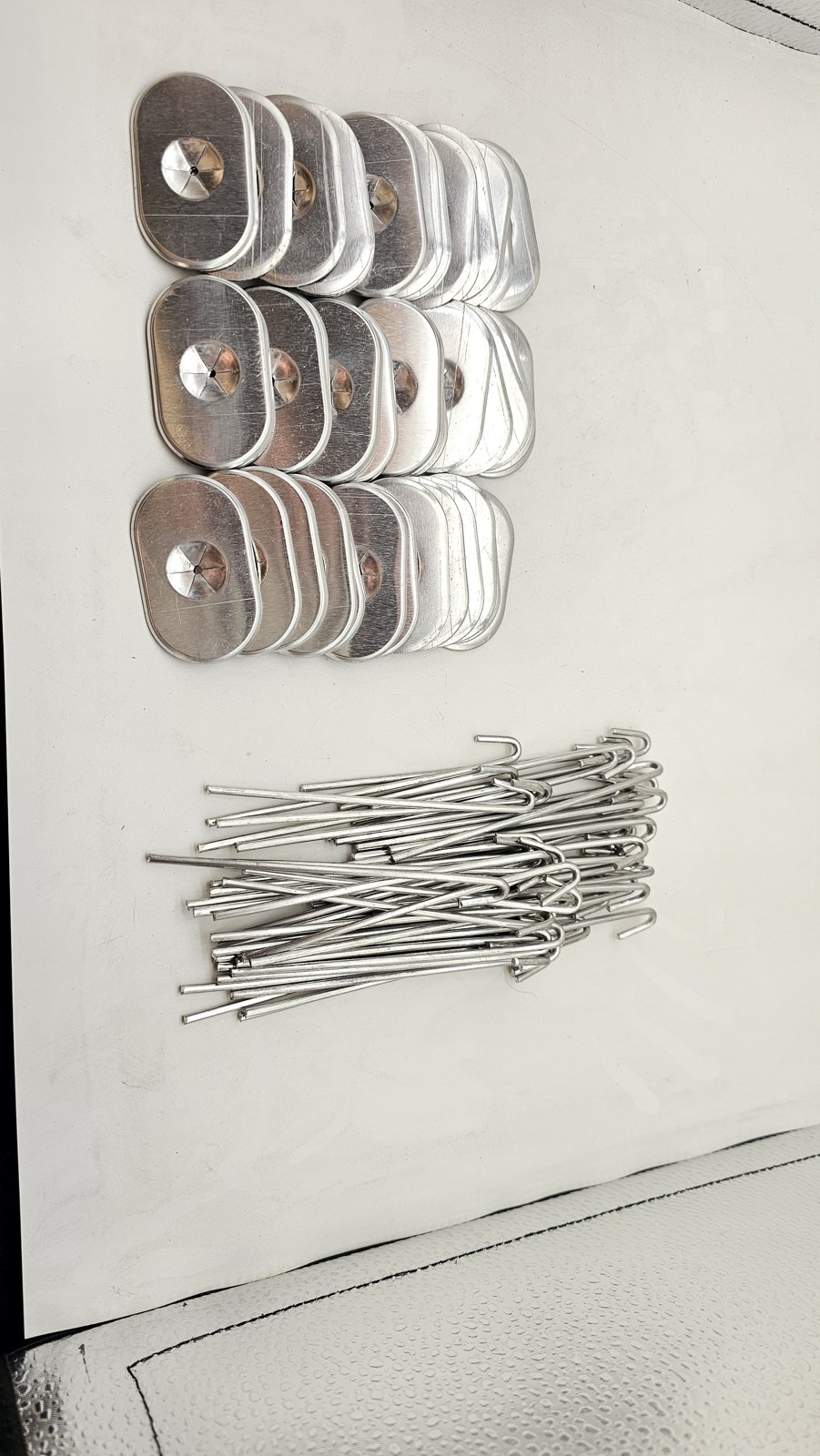
The table below sets out the three clip materials against what each is for. Use it as a selection sheet when you are quoting a job or building a kit line.
| Clip option | Construction | Weight reference | Where it fits best |
|---|---|---|---|
| Stainless steel | J-shaped stainless hook wire + black retaining disc with star cut; large or small disc | 100 sets ≈ 0.5 kg | General trade work, long runs, coastal and humid sites, kits sold on durability |
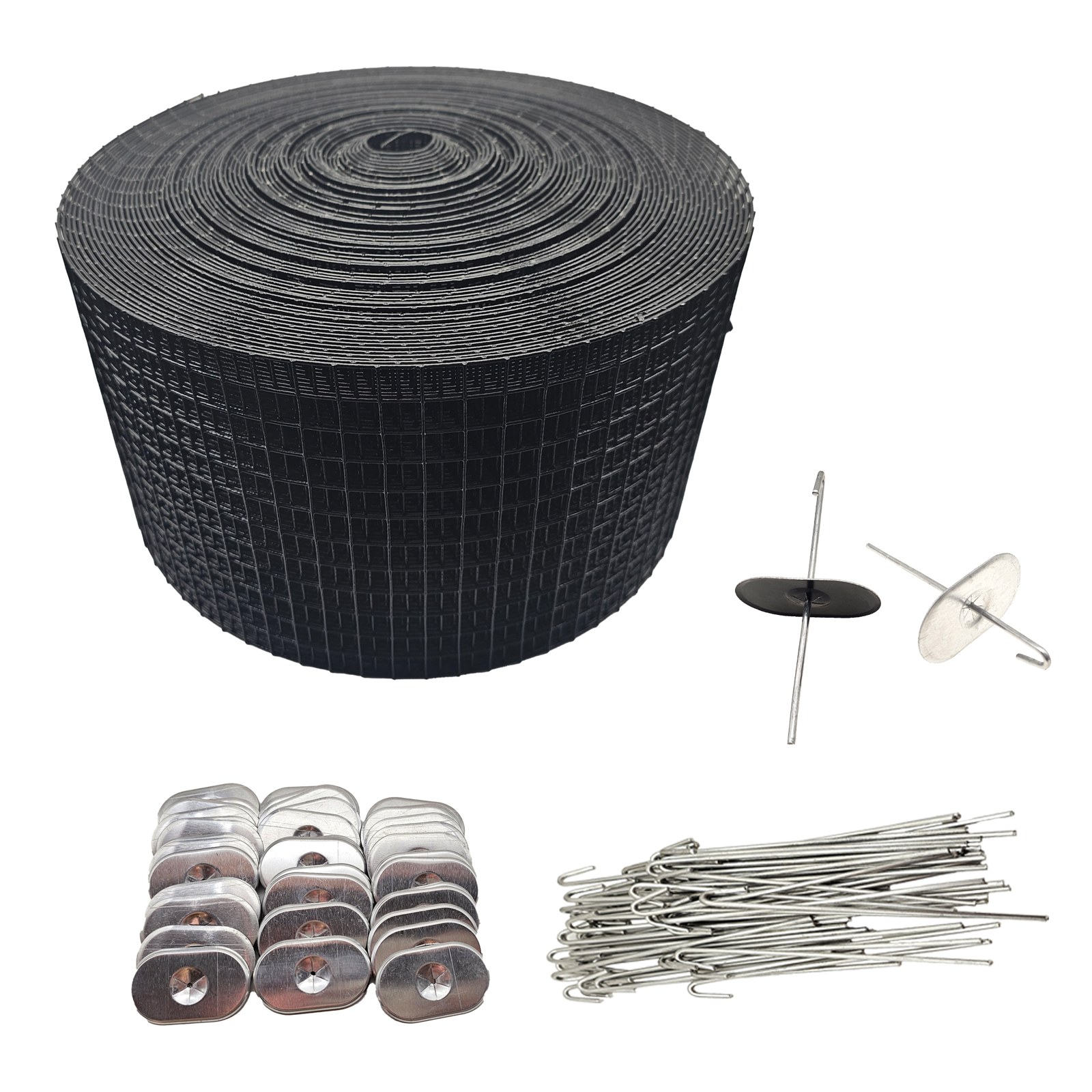
| Aluminium | Aluminium clip with washer | 100 sets ≈ 0.7 kg | Buyers who want a metal fixing other than stainless |
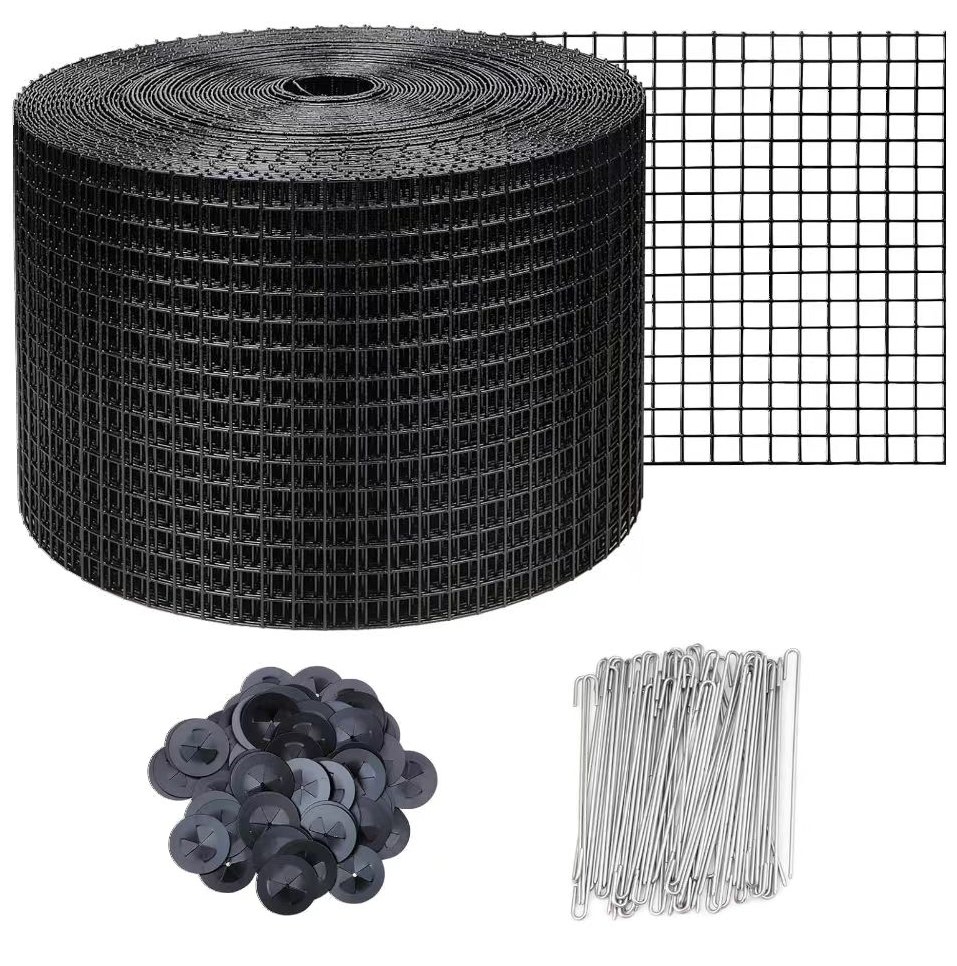
| Nylon | Threaded pin with round washer; UV-resistant, non-conductive | — | Non-metallic kits and work where a non-conductive fixing is wanted |
| Pack quantity (all types) | 60, 80 or 100 sets per roll; 100 by default | — | Match to clip spacing and to how much spare your crews want per roll |
Two practical notes. First, clips are matched to mesh, not sold loose, so your clip count follows your roll count. Second, the stainless clip is the one most trade buyers default to because it covers the widest range of sites; aluminium and nylon are chosen for a reason, not as a cheaper substitute for no reason.
If you are comparing mesh materials as well as clips, the PVC-coated steel vs stainless steel page walks through the mesh side of the same decision.
Where Critter Guard Clips Are Used
Residential retrofit. The classic job: an existing array on a tiled or metal roof, pigeons already nesting, mesh run around the perimeter and clipped to the frame. Stainless with the large disc is the usual pick because the runs are long and the mesh needs to stay flat.
New-build and commercial arrays. On larger roofs the mesh run is longer and the clip spacing has to stay consistent. Crews often standardise on one clip type across a site so that stock and training stay simple. The new-build roof guide covers why the gap is there in the first place.
Coastal and humid regions. Salt air and moisture are hard on any metal. Common trade practice is to use stainless where corrosion matters, and 316 stainless mesh is available with a 25-year warranty (free replacement mesh); galvanised mesh does not carry that warranty. General guidance on corrosion is fine, but do not promise a service life for clips beyond what the material is known for.
Frameless and thin-frame panels. Some panels have little or no frame lip to hook onto. That changes the fixing method, not the clip’s purpose. The frameless panel clip guide covers the frame-side detail.
Pest control and cleaning contractors. Contractors who fit guards as an add-on service want a predictable clip count per roll so they can price a job from the roof count. See the pigeon proofing supplies for pest controllers page for the service-buyer view.
Wholesale and kit assembly. Distributors repacking into kits want controlled clip counts, often 60 or 80 to hit a retail price point. The critter guard wholesale page covers the volume side.
Key Trade-offs When Choosing Critter Guard Clips
Material choice. Stainless, aluminium and nylon each cover a different need. Stainless is the material most often specified for coastal and humid sites; aluminium and nylon exist because some buyers need a metal fixing other than stainless or a non-metallic kit. If you sell on longevity, do not undercut yourself with the cheapest clip on a coastal job.
Disc size. The stainless clip comes with a large or small retaining disc. The choice is about how the fixing sits on the frame and mesh you are working with; both are supplied so the crew can match the disc to the job.
Clip count per roll. More clips mean more weight and more fitting time; fewer clips save weight and time. The default of 100 sets is a sensible middle. If you are building a kit, think about what the end customer will actually do with the mesh before you cut the count.
Metal against the frame. Two different metals in contact can corrode over time in wet conditions. General practice is to keep dissimilar metals apart or accept that the contact point is the first place to watch. That is one reason nylon appeals to some buyers.
The common mistakes. Buying clips without checking the mesh width. Assuming every panel has a hookable frame lip. Mixing clip types across one site so crews run out of the right one. Ordering clip counts that do not divide cleanly into the roll quantity. And forgetting that clip weight adds to carton weight when you are costing freight.
For the mesh side of the same trade-offs, the material options page and the mesh width guide are useful companions.
Packing, Lead Time and Fitting Critter Guard Clips
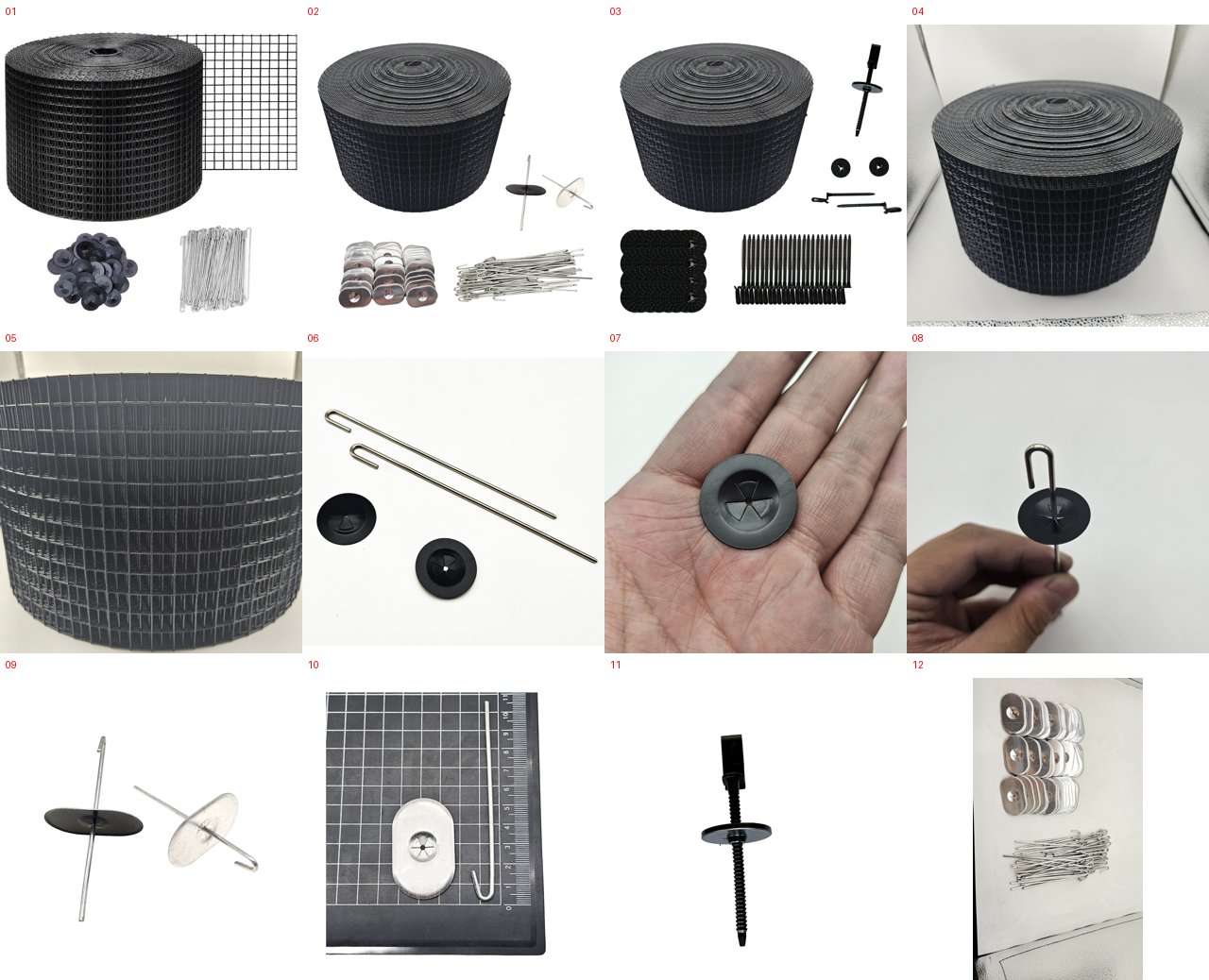
Packing. Clips travel with the mesh rolls. Mesh packing depends on wire diameter: 1.0 mm rolls are packed two rolls per carton (10 rolls = 5 cartons); 1.3 mm rolls are one roll per carton; under 50 rolls ship in cartons, 50 rolls and above go on pallets. Cartons can carry your logo sticker free, and custom printed colour boxes are available at printing cost with no minimum. Clip sets add their own weight: about 0.5 kg per 100 stainless sets and about 0.7 kg per 100 aluminium sets.
Stock and lead time. In stock: 6-inch and 8-inch mesh in 1.0 mm and 1.3 mm galvanised wire, shipping once confirmed. Stainless steel is made to order from 10 rolls, with 304 and 316 stainless taking about one week to produce. Door-to-door duties-paid delivery to Australia runs about 6–8 weeks from payment, around 30–35 days of that at sea. Freight is quoted as a separate line with its own amount. The shipping and DDP page has the detail.
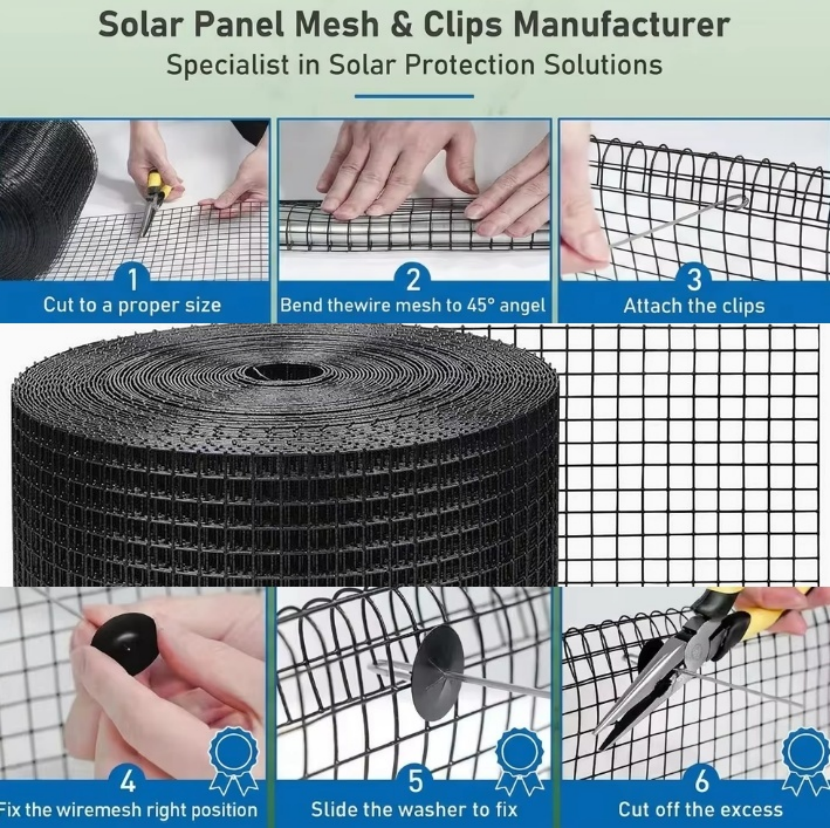
Fitting. The stainless clip hooks onto the panel frame edge and the disc presses onto the wire to trap the mesh. The nylon clip is a threaded pin with a round washer. Installation videos and written instructions are available, and the installation guide and installation resources cover the sequence. Any work on a roof or around a live array must follow the panel maker’s instructions and local safety rules; panel warranties are the panel maker’s to define, not the mesh supplier’s.
For installers in specific markets, the Australia, US and UK installer pages set out the local mesh sizes and clip expectations.
How a Custom Order Works for Critter Guard Clips
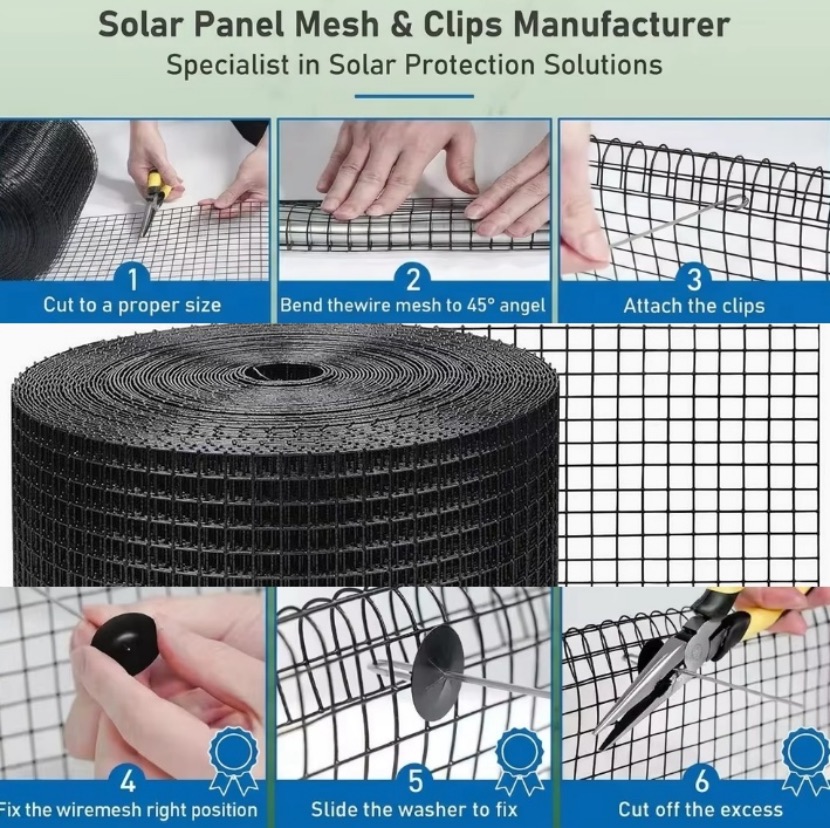
Step one: fix the mesh. Width, wire diameter and material come first, because the clip follows the mesh. Standard sizes are 1.0 mm × 4/6/8 inch, 1.3 mm × 5/6/8 inch and 1.2 mm × 8 inch. 200 mm × 30 m is common in Australia and the UK, 6 inch × 100 ft in the US, and we make both. Custom sizes such as 200 mm × 30 m or 16 inch high are available on request.
Step two: pick the clip. Stainless, aluminium or nylon; large or small disc on stainless; 60, 80 or 100 sets per roll. Tell us if the order is a kit line, because the clip count per roll is the number your retail design lives on.
Step three: set the quantity. MOQ is 10 rolls for stock sizes, mixed sizes allowed. Stainless steel is made to order from 10 rolls; 3 rolls cannot be produced. Samples are one roll free with freight paid by the buyer, and stock samples ship the same day.
Step four: confirm packaging and delivery. Carton with your logo sticker is free; custom colour boxes are at printing cost with no minimum. Payment is PayPal for small orders or bank transfer; larger orders can run 30% deposit and 70% before shipping. No cash on delivery. Door-to-door duties-paid delivery is available.
To put a clip and mesh requirement together and get a delivered figure, use the quote request page, or read the how to order page and the wholesale critter guard guide first. Articles on this site are written by Ethan, Fangyi Hardware — sales@birdguardmesh.com.

FAQ
How many critter guard clips come with each roll of mesh?
Each roll is packed with 60, 80 or 100 clip sets, with 100 sets as the default. You choose the count when you order, and it can be varied across an order.
What clip materials are available?
Stainless steel, aluminium and nylon. Stainless is a J-shaped hook wire with a black retaining disc in large or small; aluminium uses a clip with a washer; nylon is a threaded pin with a round washer that is UV-resistant and non-conductive.
How much do the clips weigh?
100 stainless clip sets weigh about 0.5 kg and 100 aluminium sets about 0.7 kg. This adds to carton weight when you cost freight.
Can I order clips on their own?
Clips are supplied with the mesh rolls rather than as a separate loose item. The clip count is set per roll, so clip volume follows roll volume.
What is the minimum order for mesh with clips?
MOQ is 10 rolls for stock sizes, and mixed sizes are allowed. Stainless steel is made to order from 10 rolls; 3 rolls cannot be produced.
Which clip suits a coastal installation?
Stainless steel is the material most often specified for coastal and humid sites because it handles salt air and moisture better than the alternatives. 316 stainless mesh is available with a 25-year warranty (free replacement mesh); galvanised mesh does not carry that warranty.
What is the lead time?
Stock sizes ship once confirmed. 304 and 316 stainless take about one week to produce. Door-to-door duties-paid delivery to Australia is about 6–8 weeks from payment, around 30–35 days of that at sea.
Can the discs be changed for a kit line?
Yes. The stainless clip comes with a large or small retaining disc, and you can set the clip count per roll at 60, 80 or 100. Custom printed colour boxes are available at printing cost with no minimum.
Request a Quote
Send your drawing or size list, the quantity and the delivery country, and we will reply with options and a quote. Request a quote.